Picture your busiest regular. The one who orders the same oat flat white every single morning, knows your barista’s dog’s name, and gets visibly emotional when you run out of the good pastries. Now imagine that customer paying you at the start of every month, whether they turn up 12 times or 30. That is the magic of a coffee shop subscription app, and in 2026 it has gone from “nice idea for the big chains” to something any independent café can set up without writing a single line of code.
If you already sell coffee, you are sitting on a goldmine of habit. People do not casually decide to drink coffee. They are devoted, ritualistic, and slightly feral before 9am. The trick is turning that daily habit into predictable income, and a branded app is the tool that does it. Let’s get into the how, the why, and the bit where you stop giving away free loyalty stamps you will never see redeemed.
What is a coffee shop subscription app, and why is everyone banging on about it?
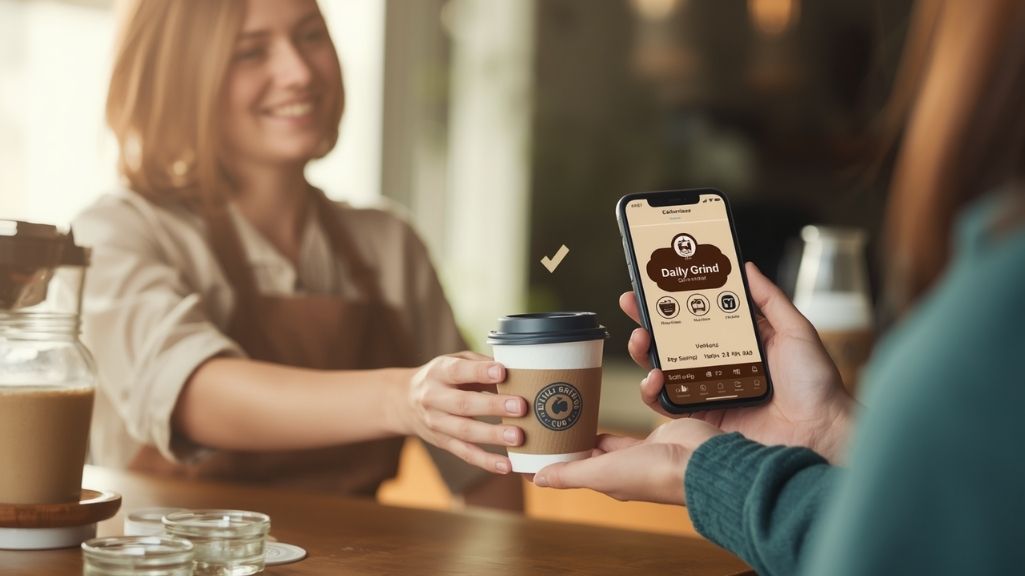
A coffee shop subscription app is your own branded mobile app that lets customers pay a fixed monthly fee for a set of perks. Usually that means a daily coffee, a discount tier, or a “one drink a day” club. Instead of hoping regulars pop in, you lock in their loyalty (and their money) up front. The app lives on their home screen, sends them the occasional friendly nudge, and quietly builds a wall between you and the chain three doors down.
The reason it is having a moment is simple: recurring revenue is the single biggest profitability lever available to an independent café right now. According to PerkClub’s 2026 analysis, a focused subscription launch can realistically hit 50 to 100 members and £2,000 to £4,000 in monthly recurring revenue by the end of month three. That is money in the bank before you have ground a single bean, which is a very nice feeling when your milk supplier emails again.
“Independent cafés have always run on habit. What’s changed is that a branded app lets you turn that habit into a subscription. You go from hoping people come back to knowing they will, because they’ve already committed.” Ian Naylor, AppBuild.diy
Aren’t loyalty stamp cards good enough?
Bless the paper punch card. It served us well. It also lives at the bottom of tote bags, goes through the wash, and gets redeemed roughly never. The problem was never the reward. It was the format.
When cafés move from paper stamps to a digital card in an app or mobile wallet, redemption rates typically jump from under 10% to 30% or higher, with no change to the underlying reward. Same “buy nine, get one free,” wildly different result, because the card is now on the phone your customer checks 300 times a day rather than in a coat they wore once in March.
A subscription app takes this a step further. A loyalty card rewards people for coming back. A subscription actually charges them to come back, then makes them feel clever for using it. Loyalty members already drive around 65% of repeat visits in coffee chains, and loyalty rewards lift visit frequency by roughly 27%. A subscription bolts guaranteed monthly income on top of all of that.
How much extra money are we actually talking about?
Let’s do the fun maths. Say you launch a “Daily Grind Club” at £45 a month for one coffee a day. To a customer buying a £3.20 flat white five days a week, that is a genuine bargain, they save money and skip the queue guilt. To you, it is a customer who now visits far more often, buys a pastry roughly half the time because they are already there, and has paid you upfront.
The wider numbers back this up. Square’s 2026 Future of Commerce report found that 74% of restaurant and café leaders now run a loyalty or rewards programme, and 80% of them say it directly increases order sizes, repeat visits, and return on investment. Coffee subscription programmes specifically increase monthly retention by around 40%. So it is not just upfront cash, it is stickier customers who wander off to the competition far less often.
“The bit café owners underestimate is the upsell. Once someone’s in the door for their ‘free’ subscription coffee, they’ll add a croissant, a second drink for a colleague, a bag of beans for home. The subscription is the hook. The basket is where you win.” Becky Halls, AppBuild.diy
What perks should a coffee subscription actually include?
The best subscriptions feel generous but do the maths quietly in your favour. A few that work well for independents:
- The daily drink club. One coffee a day for a flat monthly fee. Simple, easy to explain, and brilliant for cash flow.
- The 10% (or 15%) everything tier. A small monthly fee for a standing discount plus early access to new drinks and seasonal specials.
- The “bottomless filter” weekday pass. Great for remote workers who treat your corner table as their office. Charge for the seat and the wifi, effectively.
- Members-only extras. Free oat milk swap, a birthday cake slice, first dibs on limited beans. These cost you pennies and feel like a big deal.
Trending nicely into 2026 is personalisation, and it pays off. Leading subscription services now use taste-matching quizzes to build customer profiles, and that personalisation drives around 34% higher retention than static, one-size-fits-all offers. Even a simple “what’s your usual?” question at sign-up lets you send a smarter push notification later.
Do push notifications actually work, or just annoy people?
They work, when you are not a menace about them. Push notifications increase return visits by roughly 19%, which is the sort of number that makes the monthly platform cost look silly. The key is to sound like a friend, not a billboard.
Good push: “Rainy Tuesday. Your members’ hot chocolate is calling. See you in 10?” Bad push: “DON’T FORGET TO USE YOUR APP!!!” three times before lunch. One is a warm nudge, the other gets you swiftly muted. Aim for a couple of well-timed, genuinely useful messages a week, tied to weather, quiet trading hours you want to fill, or a new bean drop.
“Keep it human and keep it rare. The cafés that win with notifications treat them like a text from a mate, not a marketing blast. Two great messages a week beats ten desperate ones, every time.” David Hall, AppBuild.diy
Isn’t building an app expensive and complicated?
This is the myth that keeps good café owners tethered to their punch cards. It used to be true. Building an app meant developers, five-figure quotes, and a six-month wait. Not anymore.
With a no-code builder like AppBuild.diy, you drag, drop, brand it in your colours, wire up your subscription tiers and loyalty scheme, and publish. No coding, no agency, no remortgaging. A digital loyalty and subscription platform for an independent café typically lands around the cost of a few extra covers a week, and the numbers say it pays for itself fast. A single member visiting just one extra time a month at a £3.20 average already covers a big chunk of the platform cost, and most members visit far more than once extra.
The coffee subscription market itself is booming, worth around $2.8 billion in 2025 and forecast to hit $6.7 billion by 2034. The habit is clearly there. The only question is whether that recurring revenue lands in your till or someone else’s.
How do I get customers to actually download it?
The app only works if it is on phones, so make signing up a no-brainer:
- Put a QR code at the till and on every table. Scan, download, done, ideally while they wait for their drink.
- Bribe the first download. A free coffee or a “first month half price” on the subscription gets people over the line.
- Train the team to mention it. “Are you in the Daily Grind Club? You’d save a fiver a week.” One friendly sentence per regular adds up fast.
- Launch it like an event. A “founding members” week with a limited perk creates a bit of urgency and gives your keenest regulars bragging rights.
FAQ
How much should I charge for a coffee subscription? Price it so a regular saves money versus paying per cup, while you still profit from the extra visits and upsells. For a daily-drink club, take your average drink price, multiply by the visits you expect, and set the fee a little below that. A member who feels they are winning is a member who stays.
Will a subscription cannibalise my normal sales? Rarely, because subscribers visit more often and spend on extras once they are in. You are swapping a slim chance of an occasional visit for a guaranteed monthly payment plus a bigger basket. The maths almost always works in your favour.
Do I need a POS integration to run this? It helps but is not essential to start. Many café apps run the subscription and loyalty side independently and simply have staff check the member’s app at the counter. You can connect your till system later as you grow.
How long until it pays for itself? Often within the first month. If a modest platform fee is covered by a handful of members each visiting one extra time, you are already ahead, and most cafés sign up far more than a handful in their launch week.
Can a tiny one-site café really pull this off? Absolutely, and small is an advantage. You know your regulars by name, which makes launching a members’ club feel personal rather than corporate. Independents often see higher engagement than chains precisely because the relationship is already there.
Your regulars already love you. A coffee shop subscription app just turns that love into steady, predictable, milk-supplier-soothing income. Build yours in an afternoon with AppBuild.diy, and let your morning rush start paying you at the start of the month instead of the end.
Last Updated on July 17, 2026 by Becky Halls
0 thoughts on “The Rise of The Coffee Shop Subscription App in 2026”