You’ve passed your quals. You’ve built a client base through word of mouth, sweated through Instagram Reels demonstrating kettlebell swings, and somehow managed to keep track of everyone’s programming via a WhatsApp group that now contains 47 unread messages, a rogue meme from a client called Gary, and zero actual bookings.
Sound familiar? We thought so.
Here’s the thing: the personal training industry is booming! The UK PT market alone is worth over £1.7 billion and growing year-on-year, and the trainers pulling ahead of the pack right now aren’t just the ones with the best programming. They’re the ones who’ve built a professional, digital experience around their business. The ones with a branded app on their clients’ phones.
Good news: you don’t need a tech team, a developer, or a business loan to make it happen.
Why is a personal trainer app suddenly such a big deal?
Because your clients live on their phones, and your competition is starting to catch up.
The fitness world has shifted dramatically post-2023. The old model (gym floor + clipboard + WhatsApp) is giving way to hybrid training, online coaching programmes, and clients who expect the same seamless digital experience from their PT that they get from their bank, their food delivery service, and their coffee shop loyalty scheme. Expectations have gone up. The trainers who are building sustainable, profitable businesses in 2026 are the ones who’ve made themselves easy to work with — online as well as in person.
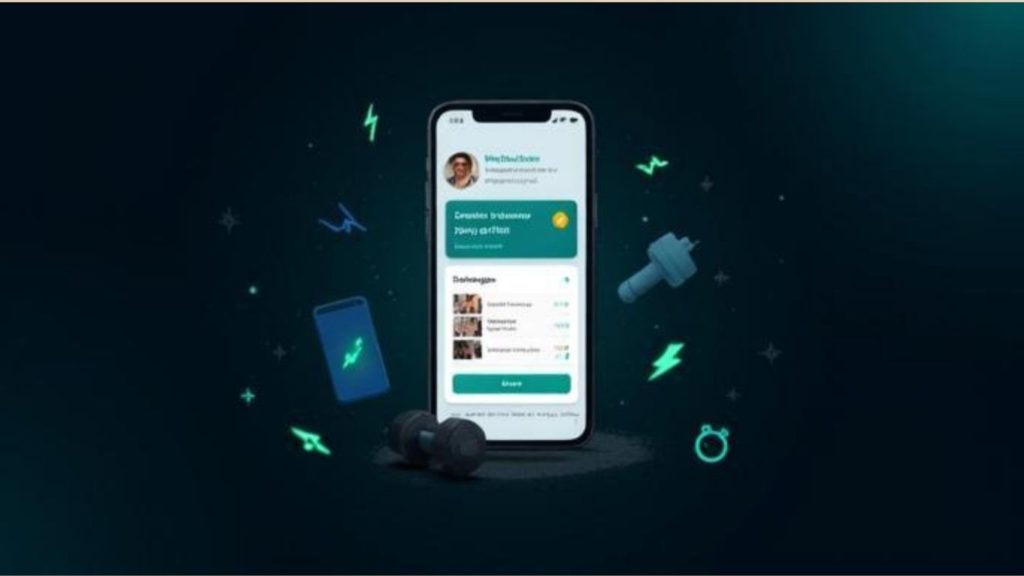
An app gives you a central hub for your entire client relationship. Bookings, session reminders, check-ins, workout content, progress tracking prompts, push notifications, loyalty rewards – all of it, branded to you, sitting on their home screen.
And the data backs this up: clients who can self-service their bookings and track progress digitally are significantly more likely to stick to a programme long-term, which means better retention, more referrals, and a business that doesn’t start from scratch every January.
What can a personal trainer app actually do?
Let’s get specific, because this is where it gets genuinely exciting (and where you start mentally listing all the headaches it would solve).
Booking and scheduling — clients book sessions directly from the app, you get a notification, both of you have it in the diary. No more “does Tuesday at 6pm work?” message threads that go on for four days.
Push notifications for accountability — this is the hidden gem of any PT app. A well-timed “Your session is tomorrow — here’s your pre-workout reminder 💪” notification does more for attendance rates than any amount of motivational chat. You can send these to all your clients, or target specific people who’ve gone quiet. It’s the digital equivalent of a tap on the shoulder.
Workout and programme content — share workout plans, technique videos, and programme notes directly through the app. No more PDF files lost in email threads. Clients can access everything in one place, even mid-session, and you control what they see and when.
Progress and check-in prompts — set up regular check-in reminders so clients log their progress, how they’re feeling, and any issues between sessions. You go into each session informed, not guessing.
Loyalty and rewards — yes, even for PTs. A digital loyalty system that rewards clients for consistent attendance, hitting milestones, or referring a friend is a surprisingly powerful retention tool. People love being recognised. It doesn’t have to be complicated – a “10 sessions = a free nutrition consult” reward works brilliantly.
Your brand, front and centre — this is the one people underestimate. Having your logo on someone’s home screen is marketing that money can’t buy (well, not much of it anyway). You’re not just a contact in their phone — you’re a presence.
“Personal trainers spend years building a reputation and a relationship with each client, and an app lets you extend that relationship beyond the gym floor. It keeps you connected between sessions, which is where the real behaviour change actually happens.” — Ian, AppBuild.diy
Is AI personal training making PT apps even more powerful?
This is the trending angle that’s all over the fitness industry right now — and the honest answer is yes, but not in the way you might fear.
AI-powered fitness apps (think generated workout plans, automated check-in analysis, smart scheduling) are growing rapidly. The global AI fitness market is projected to hit $35 billion by 2028, and the big platforms are leaning in hard. But here’s what those AI-only apps can’t replicate: you. Your personality. Your ability to read a client’s mood before a session and adjust on the fly. Your knowledge of the fact that Dave’s been stressed at work and needs a different kind of session today.
The smart play isn’t to compete with AI-generated coaching — it’s to use technology to amplify your human advantage. An app that handles the admin, reminders, and programme delivery frees you up to focus on what you actually do best: coaching people.
“The trainers who’ll thrive alongside AI are the ones who use tech to handle the logistics so they can show up fully for the human side. An app is the simplest version of that — it takes the faff out so the coaching can shine.” — Becky, AppBuild.diy
The rise of hybrid training (a mix of in-person and online sessions) has also made this more relevant than ever. Over 60% of fitness businesses now offer some form of hybrid coaching, and an app is pretty much essential infrastructure for making that work smoothly. It becomes the connective tissue between your in-person sessions and everything else.
How much does a personal trainer app actually cost to build?
Let’s address the elephant in the room, because most PTs assume an app is something they’ll add to their business “eventually, when they’ve got more money.”
Custom development: we’re talking £10,000–£40,000 and several months, with ongoing costs for maintenance. Not exactly realistic for a sole trader with 15 clients and big ambitions.
No-code app builders like AppBuild.diy: a fraction of that. A straightforward monthly subscription, no dev costs, no agency fees, and a setup process that takes an afternoon rather than a quarter. You build it yourself through a visual interface, launch it to App Store and Google Play, and you’re live before your next client session.
The ROI calculation is pretty simple. If an app improves your client retention by even 15% – keeping clients for an extra month or two before they drift off – the revenue gain far outweighs the subscription cost. And that’s before you factor in the referrals from clients who tell their friends you’re the PT with the proper app setup.
Can I actually build a PT app myself without any technical knowledge?
You can most definitely build a personal trainer app yourself, and this question comes up every single time we talk to a personal trainer considering this.
No-code builders are specifically designed for people who run businesses, not people who code. The whole setup process is visual and guided. You pick the features you want (booking, push notifications, workout content, loyalty rewards), upload your branding, configure your settings, and you’re done. The whole thing usually takes an afternoon the first time, and maintenance after that is easier than managing your social media.
“I’d say to any PT: if you can put together a training programme in Google Docs and post a reel on Instagram, you can build an app. It’s honestly that straightforward. And the first time you get a session booked through your own app at 11pm while you’re asleep, you’ll wonder why you waited.” — David, AppBuild.diy
What about online-only coaches – is an app still worth it?
Arguably even more so. If you’re running an online coaching business with clients spread across different time zones, an app becomes your entire client communication and delivery infrastructure. Programme content, check-in prompts, push notifications, booking for video calls — it all lives in one branded place that your clients open proactively, rather than waiting for an email to land.
Online coaching without a centralised client experience can feel fragmented – content on Notion, calls on Zoom, payments on Stripe, messages on WhatsApp. An app pulls all of that together into a single, professional hub. It also signals to prospective clients that you run a proper business, which matters more than people admit when they’re deciding whether to invest in coaching.
FAQ: Personal Trainer Apps
Q: Do my clients have to pay for the personal trainer app?
A: No, your clients download your branded app for free from the App Store or Google Play. The subscription cost is yours as the business owner. Think of it like any other piece of business software.
Q: Can I use an app if I train clients at multiple locations?
A: Absolutely. Your app isn’t tied to a single gym — it’s tied to you as a trainer. Clients can book sessions at whatever location you specify, and you can manage it all from one dashboard.
Q: What if I only have a small number of clients right now?
A: This is exactly the right time to build one. Getting the infrastructure right while your client base is small means it’s already in place (and looking professional) when you scale. Plus, a well-presented app can be the difference between a prospect choosing you over another trainer.
Q: Can I share video content and workout plans through the app?
A: Yes, you can upload workout content, technique videos, and programme notes directly into the app for clients to access. No more lost email attachments or links buried in WhatsApp.
Q: What about payments – can I take bookings and payments through the app?
A: Payment integration is available on AppBuild.diy, so clients can book and pay directly through the app. One less thing to chase.
Q: Is it complicated to update the personal trainer app once it’s live?
A: Not at all. Day-to-day updates – adding a new workout, tweaking your loyalty reward, sending a push notification — all happen through a simple dashboard. No technical knowledge required, no waiting for a developer.
Q: What happens when I take on more clients or expand my offering?
A: No-code apps are designed to scale with your business. Adding new features, increasing your client base, or expanding to group sessions or online coaching packages – all of that can be built into your app as you grow.
The bottom line: your clients deserve a better experience than a WhatsApp thread
You’ve worked hard to build the knowledge, the programming, and the relationships that make you a great trainer. An app doesn’t replace any of that – it just makes it easier for your clients to access, and easier for your business to grow.
Less time chasing bookings. Less energy managing five different tools. More time being the trainer you actually want to be.
The personal training market is competitive and it’s only getting more so. The trainers building apps now aren’t the ones with the biggest budgets – they’re the ones who’ve realised that a professional digital presence isn’t a luxury anymore. It’s the baseline.
AppBuild.diy — Build your personal trainer app today. No code. No agency. No drama.
Last Updated on May 28, 2026 by Becky Halls
0 thoughts on “Does Every Personal Trainer Need Their Own App in 2026?”