Here is a sentence nobody expected to write in a marketing blog: some of your best customers actually want to pay you before they have bought anything.
Not for the coffee. Not for the haircut. For the privilege of being a member – paid loyalty programs.
It sounds a bit bonkers, but it is exactly what Amazon Prime, Walmart+ and a growing pile of independent shops, cafes and studios have worked out. The classic loyalty program (collect points, get a freebie, feel vaguely rewarded) is no longer the only game in town. In 2026 the fastest-growing corner of customer loyalty is the paid membership: your own little Prime, run from a branded app that sits in your customer’s pocket.
If you have ever thought “there is no way people would pay to be loyal to my business”, grab a cup of something and stick with us. The numbers are surprising, the setup is easier than you think, and no, you do not need Jeff Bezos money to pull it off.
What is a paid loyalty program, and how is it different from points?
A traditional loyalty scheme is free to join. You collect stamps or points, and eventually you earn a reward. Lovely, low commitment, and easy to ignore.
Paid loyalty programs (sometimes called premium or fee-based loyalty) flip the model. The customer pays a small recurring fee, monthly or yearly, and in return they get ongoing perks: a standing discount, free delivery or collection, members-only products, early access, a monthly freebie, priority booking, that sort of thing.
The difference is psychological as much as financial. When someone has paid to be a member, they want to get their money’s worth, so they visit more often and spend more to justify the fee. It is the gym-membership effect, except this time they actually turn up.
Think of it as the difference between “I might pop in if I remember” and “I am literally paying for this, so we are going”.
“Free loyalty says ‘come back sometime’. Paid loyalty programs say ‘you belong here’. That shift in mindset is worth more than any 10% discount, because it turns an occasional customer into a regular who feels part of the club,” Becky Halls at AppBuild.diy.
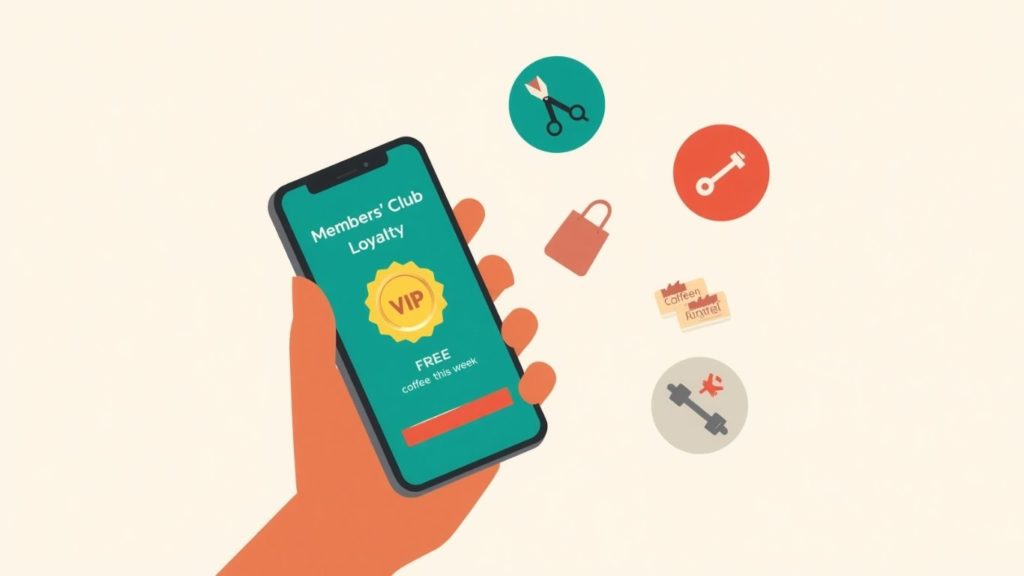
Would customers really pay to be loyal to a small business?
This is the bit that stops most owners in their tracks, so let us deal with it head on.
According to loyalty research pulled together for 2026, 64% of consumers say they would be willing to pay for exclusive loyalty perks, while only around 22% of businesses currently offer a premium program. Read that again. Nearly two thirds of shoppers are open to paying, and barely a fifth of businesses are offering it. That gap is not a warning sign, it is an open door.
And it is not just an Amazon thing. The behaviour shows up across the board: paid loyalty members are roughly 60% more likely to increase their spending with a brand than free-scheme members. Walmart+ members spend around $79 per online visit versus $62 for non-members and shop roughly 11 more times a year. Kroger’s paid Boost members funnel more than double the share of their grocery budget to Kroger compared with non-members.
The pattern is dependable: once someone has skin in the game, they stop drifting between you and your competitors and start treating you as their default.
Now, will every customer pay? Of course not. You are not trying to convert everyone. You are trying to capture your warmest 10 to 20%, the regulars who already love you, and give them a way to go all in.
What should you actually put behind the paywall?
The magic is in the maths. Your membership perks need to feel like a bargain to the customer while still leaving you in profit. The trick is offering things that feel generous but cost you very little.
A few ideas that work for small, independent businesses:
A cafe or coffee shop can offer a “coffee club” at, say, £8 a month that includes one free drink a week plus 10% off everything else. The regular who was already buying four coffees a week feels like they are winning, and you have locked in their visits.
A hair or beauty salon can offer priority booking, a members-only monthly treatment discount, and first dibs on the diary in December when everyone suddenly remembers they have a party. Priority access to your calendar is genuinely valuable and costs you nothing to give.
A retailer or boutique can run a members’ price list, early access to sales, and a members-only new-stock preview. Exclusivity is cheap to create and brilliant at making people feel special.
A gym, PT or class studio can bundle on-demand content, a members’ community and a monthly guest pass into a premium tier that sits above pay-as-you-go.
The point is not to give away the shop. It is to reward the behaviour you already want (more frequent visits, bigger baskets, direct bookings) and wrap it in something that feels like a VIP badge.
“The businesses that win with paid loyalty are the ones that stop thinking about discounts and start thinking about belonging. Give people a reason to feel like an insider and they will happily pay for the feeling, then reward you by coming back twice as often,” Ian Naylor from AppBuild.diy.
Why does a branded app make paid loyalty actually work?
You could, in theory, run a paid membership with a spreadsheet, a laminated card and a lot of goodwill. Please do not. It will fall apart by week three.
A branded app is what makes the whole thing tick, for a few reasons.
First, it handles the recurring payment and membership status automatically, so nobody is fishing for a dog-eared card and you are not chasing renewals by hand.
Second, it lives on the home screen. Your member sees your logo every time they scroll past, which is free advertising that Instagram would charge you a fortune for.
Third, and this is the big one, it lets you talk directly to your paying members with push notifications. “Members’ happy hour today, 3 til 5” or “New arrivals dropping tomorrow, members get first look at 9am”. You own that channel. No algorithm decides who sees it, and your members opted in because they actually want to hear from you.
The wider market agrees this is where things are heading. The global loyalty management market is projected to grow from around $17.4 billion in 2026 to over $51 billion by 2034, and a huge chunk of that growth is app-based and subscription-led. The tools that used to be locked away in big-chain budgets are now available to any independent business through no-code app builders.
And here is the genuinely good news for 2026: you do not need a developer, a big budget or a computer science degree to build one. With a no-code platform like AppBuild.diy you can set up membership tiers, take recurring payments, send push notifications and manage your members yourself, usually in an afternoon.
“People assume a membership app is a big-business toy. It really is not anymore. If you can use Facebook, you can build a paid loyalty app for your shop. Start with one simple tier, price it so it is a no-brainer, and let your regulars tell you what they want next,” David Hall at AppBuild.diy.
How do you get people to sign up in the first place?
Building it is the easy part. Getting that first wave of members is where a bit of hustle comes in, so here are some tips that actually work.
Lead with your regulars, not strangers. The people already at your counter every week are your founding members. Tell them face to face, “we are launching a members’ club, and because you are one of our favourites, you get in first.”
Make the first month a no-brainer. A cheap or free trial month lowers the fear factor. Once they experience the perks (and start subconsciously justifying the fee) most will happily continue.
Put a QR code everywhere. On the till, the table, the mirror, the receipt, the loyalty leaflet you used to hand out. Scan, download, join. Friction is the enemy.
Show the maths on the wall. A little sign that says “Members save £X a month” does a lot of the selling for you. People love a visible bargain.
Give founding members a badge of honour. Limited “founding member” spots, a special mention, a little extra perk for the first 50. Scarcity plus status is a powerful combination.
Aren’t paid loyalty programs just subscriptions people will forget and cancel?
Fair worry, and worth addressing. The apps that fail are the ones where the member pays, gets nothing new, and quietly forgets why they joined.
The fix is simple: keep the value visible. Send the odd push notification that reminds them what they are getting (“your free members’ coffee is waiting”). Refresh the perks occasionally. Celebrate milestones. If people can see and feel the benefit every week, cancellations stay low and your monthly recurring revenue becomes the steadiest income your business has ever had.
Predictable monthly income, from customers who spend more and visit more often, who chose to pay you for the privilege. When you put it like that, the only strange thing about paid loyalty is that you have not tried it yet.
Paid Loyalty Programs – FAQ
How much should I charge for paid loyalty programs and memberships? Price it so the perks feel like a clear win for a regular customer while still leaving you in profit. A good rule of thumb is to make the monthly fee roughly equal to one typical purchase, then load in perks that are worth noticeably more than that. Test it, watch the sign-ups, and adjust.
Do I need to get rid of my free loyalty program? Not at all. The best setup is usually a free tier to catch everyone, with a paid loyalty tier on top for your most loyal customers. Free loyalty grows your list, paid loyalty grows your revenue. A branded app can run both at once.
What kind of business does paid loyalty suit? Any business with repeat customers. Cafes, salons, gyms, boutiques, takeaways, class studios, pet groomers, you name it. If people come back to you regularly, some of them will happily pay to make that relationship official.
How quickly can I set up a membership app? With a no-code builder like AppBuild.diy, most owners get a basic membership app with recurring payments and push notifications live within a day or two, no coding required. Start simple with one tier and grow from there.
Will customers actually download an app just for loyalty? Yes, when the payoff is clear. Lead with an immediate perk (a free item or an instant members’ discount on sign-up), keep the download quick with a QR code, and make sure your members feel like insiders. People download apps for far less exciting reasons every day.
What is the biggest mistake to avoid? Charging for a membership and then going quiet. If members do not see fresh value, they cancel. Keep perks visible, send the occasional friendly nudge, and treat your paying members like the VIPs they are.
Ready to give your best customers a club worth paying for? Build your branded loyalty app with AppBuild.diy by AppInstitute and turn your regulars into paying, repeat-spending members.
Last Updated on October 2, 2026 by Becky Halls
0 thoughts on “Should Your Business Charge for Loyalty? The Rise of Paid Loyalty Programs”