Here’s a fun thought experiment: Picture your favourite podcast host recording an episode alone in a room, talking into a foam-covered microphone, hoping someone out there is nodding along. Now picture that same host asking a live question, watching hundreds of votes roll in, and reading out a listener’s name on air thirty seconds later. One of those feels like broadcasting. The other feels like a party. Guess which one people actually stick around for?
For years, radio and podcasting have been a beautifully one-sided relationship. You talk, they listen, everyone goes home. But in 2026 that dynamic is flipping on its head, and the shows winning the loyalty game are the ones handing the microphone back to their audience. The tool making that possible for independent creators and stations? Your own branded, interactive podcast app. Let’s get into it…
Why is “interactive” suddenly the word everyone in podcasting keeps saying?
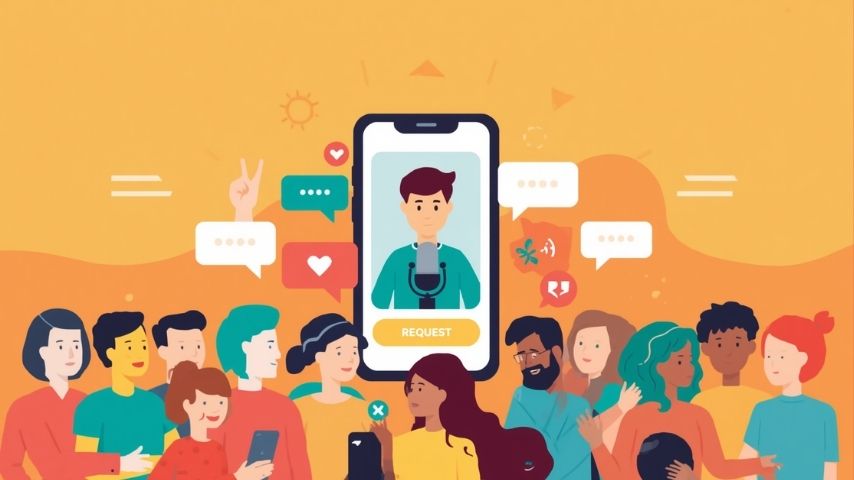
Because listeners stopped being happy just sitting there. Podcasting has grown up from a lean-back, headphones-in, brain-off medium into something much closer to a live event you can join. In 2026, people don’t only want to consume your show, they expect to influence it. Polls during recordings, a “request the next topic” button, live chat, shout-outs, member comments. The boundary between host and audience has gone gloriously blurry.
And the numbers back it up. Over 70% of podcast listeners finish most or all of an episode, and nearly half tune in within 24 hours of release, which tells you this is appointment listening, not background noise (SQ Magazine’s 2026 podcast data). These are engaged humans practically leaning towards the speaker. Give them a way to actually participate and something interesting happens: interactive elements like polls, Q&A and real-time reactions have been shown to lift engagement by up to 3.8x (Pen Agency’s 2026 podcasting analysis). That is not a rounding error. That is the difference between a show people forget and a show people build their week around.
“The best shows in 2026 aren’t broadcasts, they’re conversations that happen to have a presenter. The moment a listener votes in a poll or sees their name read out, they stop being an audience member and start being part of the furniture. That’s the loyalty you can’t buy with ad spend.” – Ian Naylor, AppBuild.diy
But can’t I already do polls on Spotify or Instagram?
You can, and good for you, genuinely. The problem is you are hosting your party in someone else’s house. Every poll on Spotify, every Q&A sticker on Instagram, every comment thread on YouTube builds engagement for their platform, on their terms, using their rules, feeding their algorithm. When they tweak the reach settings on a wet Tuesday, your carefully built connection to your listeners takes the hit and you never even get a heads up.
Your own app flips that. The polls, the request button, the live chat, the shout-out queue, they all live in a space with your name on the icon. You own the relationship, you own the data, and nobody can throttle your reach because they fancy pushing a new feature this quarter. Think of platform features as renting a function room and your app as buying the building. Both let you throw a party. Only one lets you keep the keys.
What interactive features actually keep listeners coming back?
Here’s the honest bit: you don’t need all of them, and bolting on every gimmick at once is how you end up with an app nobody understands. Start with the features that turn listening into taking part.
A live request or topic-suggestion button lets listeners steer the show, which means they have a reason to care how the next episode turns out (they helped make it). Live polls during recordings or premieres make people feel heard in real time, and they give you free content because the results become a talking point. Shout-outs and dedications are ancient radio magic for a reason, hearing your own name is ridiculously powerful, and an app makes collecting and queueing them painless. Member comments and a listener chat turn a solo show into a community clubhouse where your fans start talking to each other, not just to you. And push notifications mean when you go live or drop a new episode, your most loyal people know instantly, no algorithm permission required.
Shows that genuinely pull listeners into the action, votes, questions, live call-ins, dedications, have reported engagement boosts of up to 150%. The common thread across every one of those features is simple: they give the listener a job. A listener with a job doesn’t drift off to the next show in their queue.
“People think you need a huge audience before an app is worth it. It’s the opposite. When you’re small, every single listener matters more, and giving your first hundred fans a request button and a shout-out queue is how a hundred becomes a thousand. Interaction is the multiplier.” – Becky Halls, AppBuild.diy
Isn’t building an app a job for people with a tech team and deep pockets?
This is the myth that keeps brilliant independent creators stuck renting audiences forever, so let’s put it to bed. You do not need to code. You do not need a developer on retainer. You do not need to remortgage anything.
No-code app builders like AppBuild.diy exist precisely so a one-person podcast or a small community radio station can launch a proper branded app with live features, push notifications and an interactive listener wall, without touching a single line of code. You drag, you drop, you brand it in your colours, you publish. The whole point is that the person who runs the show also runs the app, in an afternoon, in between recording episodes and arguing about the running order.
The barrier was never the technology. It was the belief that the technology was out of reach. In 2026, that belief is simply out of date.
How do I actually get my listeners to download the thing?
Fair question, because an app nobody installs is just a very tidy icon on your desktop. The trick is to give people a reason that lives inside the app and nowhere else.
Make the interactive stuff app-exclusive. The best shout-outs get read from app requests only. The bonus after-show chat is app-only. The poll that decides next week’s guest is app-only. Then tell people, on every episode, in plain words: “want your name on the show? The request button’s in our app, link in the description.” Put a QR code on your studio wall, your live event flyers, your social bios. And give the download an instant payoff, an exclusive clip, a welcome shout-out, a members-only episode, so the reward lands the second they open it. People download for the perk and stay for the community.
“Don’t ask people to download an app. Ask them to join the show. One of those sounds like homework, the other sounds like an invitation. Lead with what they get, a voice on the mic, a vote that counts, a name read out, and the install takes care of itself.” – David Hall, AppBuild.diy
What’s the one thing to do this week?
Pick a single interactive feature and build one episode around it. Run a live poll, or open a request button, or read out three listener shout-outs collected through your app. Just one. Watch what happens to the comments, the completion rate, the “loved being mentioned!” messages. That small taste of taking part is what turns a passive listener into someone who tells their mates about your show. Everything else, the community wall, the memberships, the push strategy, grows from that first moment a listener realises this show talks back.
Interactive podcast app – FAQ
Do I need a big audience before an interactive podcast app makes sense? No. Smaller shows arguably benefit most, because every listener counts for more and interaction is what grows a modest audience into a loyal one. A hundred engaged fans with a request button beats ten thousand passive downloads.
Will an app replace Spotify, Apple Podcasts and YouTube? It doesn’t have to. Keep distributing everywhere you already do. The app is your home base for the loyal core, the place where interaction, community and first-party data live, so you’re not entirely at the mercy of any one platform’s reach.
What interactive feature should I launch first? Whatever suits your show. Live radio loves requests and dedications. Interview podcasts love listener Q&A. Community shows love a member chat. Start with one, do it well, then add more once your audience is hooked.
How much technical skill do I need? None. No-code builders like AppBuild.diy handle the technical side so you can focus on the show. If you can brand a social profile, you can brand and launch your app.
How do I convince listeners to download it? Make the good stuff app-only (shout-outs, polls that decide the show, bonus content), promote it on every episode, use a QR code, and give an instant reward on first open. People install for the perk and stay for the belonging.
Radio and podcasting were never meant to be a lecture. The shows that will own listener loyalty in 2026 are the ones that hand people a way in, a vote, a voice, a name on the mic, and an interactive podcast app is how independent creators finally do that on their own turf. Talk with your audience, not just at them, and watch how quickly listeners become superfans.
Ready to turn listeners into co-hosts? Build your own interactive radio or podcast app, no code required, at AppBuild.diy.
Last Updated on July 31, 2026 by Becky Halls
0 thoughts on “Talking At Your Listeners Is So 2015: How an Interactive Podcast App Turns Fans Into Co-Hosts”