Everyone tells you to “build a community.” Nobody tells you how to build one that pays your mortgage. So you start a free Facebook group, 300 people join, three of them post cat memes, and eight months later it’s a tumbleweed rolling past a pinned welcome message from last spring… This is where a membership community app comes in!
And here’s the good news: 2026 is arguably the best year in history to turn a community into real, recurring income. The creator economy is now worth around $200 billion and growing at roughly 23% a year, on track to pass $800 billion by the early 2030s (Circle’s 2026 Creator Economy report). The catch? The people cashing in aren’t running free groups on rented land. They’re running paid membership community apps they actually own.
Let’s talk about how you do the same, with your own branded membership community app, without needing a developer, a venture capitalist, or a personality transplant.
What Is a Membership Community App, and Why Should I Care?
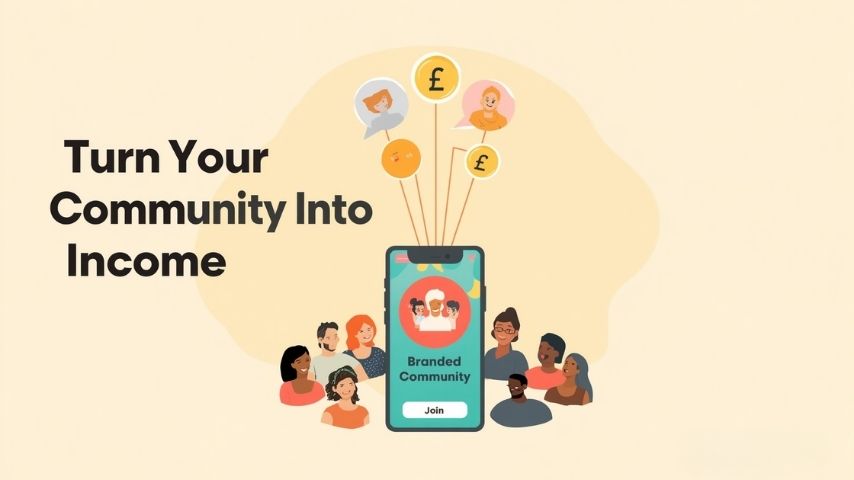
A membership community app is your own branded space where members join, chat, access content, book things, and (crucially) pay you to be there. Think of it as the members’ club version of a Facebook group: same warm fuzzy belonging, but you hold the keys, the member list, and the till.
The difference between “community” and “community that funds your life” comes down to one word: ownership. On social platforms you rent your audience and the landlord keeps changing the locks (and the algorithm). With a Vibes app built on AppBuild.diy, the relationship is yours. Push notifications land on the phone, not in a feed that shows your post to 4% of followers on a good day.
“The businesses winning with community in 2026 aren’t the ones with the biggest audiences,” says Ian at AppBuild.diy. “They’re the ones who moved 200 genuine fans into a space they own and charge for. Two hundred paying members beats twenty thousand ghosts every single time.”
And the numbers back him up. Among community-led creators, 88% now monetise through paid memberships, according to Circle’s 2026 Community Trends Report. This isn’t a fringe hustle anymore. It’s the model.
Do I Really Need Paying Members, or Can I Keep It Free?
You can absolutely keep it free. You can also keep juggling flaming torches. Both are technically possible and neither pays the bills.
Free communities have a sneaky problem: when something costs nothing, people value it at roughly nothing. They join, they lurk, they forget it exists. A small paywall, even a tiny one, changes the psychology completely. Suddenly members show up, because they’ve got skin in the game.
Here’s a stat to impress you: across 100,000+ monthly subscriptions, 70% of creators offering paid subscriptions generated a median of $1,000 a month from just 26 members paying $39 each (uscreen creator economy data). Twenty-six people. That’s a small book club, not a stadium. You don’t need to go viral. You need a couple of dozen humans who genuinely value what you offer.
“People assume you need thousands of members to make money,” says Becky at AppBuild.diy. “You really don’t. You need a handful of the right people and a reason for them to stay. Charge a fair price, deliver something they can’t get elsewhere, and the maths gets friendly fast.”
Why Do So Many Online Communities Turn Into Ghost Towns?
Ah, the ghost town. Population: one very tired admin talking to themselves. It’s the most common way communities die, and it’s usually not because the idea was bad. It’s because of a few very fixable mistakes.
Studies suggest a large majority of online communities fail, with poor engagement responsible for roughly a quarter of the collapses (BuddyBoss community research). The usual culprits:
Confusing a platform with a community. A shiny app is a tool, not a relationship. If nobody has a reason to open it twice, it’s just a very expensive digital notice board.
Invisible leadership. If the founder ghosts the group, so does everyone else. Communities take their cue from the person at the front.
No rhythm. Communities thrive on predictable moments: a weekly Q&A, a Monday check-in, a monthly challenge. Remove the rhythm and you remove the reason to return.
The fix isn’t posting more. You can’t post your way out of a dead room. The fix is designing reasons to come back, and here’s the encouraging bit: well-run communities hit engagement of nearly 50% of members, which absolutely batters the 4-5% organic reach you’ll scrape from social media.
How Do I Get People to Actually Pay to Join?
Nobody pays for “access to a group.” They pay for a transformation, a shortcut, or a feeling they can’t get for free. Your job is to make the value obvious before the wallet comes out.
A few models that work brilliantly inside a Vibes app:
The inner circle. Free content on socials, the good stuff (deeper coaching, direct access to you, member-only drops) behind a monthly membership. Instagram is the shop window, the app is the shop.
Tiered membership. A cheap “supporter” tier for casual fans, a premium tier with live sessions or 1-to-1 time. Let people choose how deep they go. Around 41% of creators now lean on recurring subscriptions as a core income stream, precisely because predictable monthly revenue beats chasing one-off sales.
The cohort or challenge. Run a 30-day something (fitness, sobriety, sourdough, side hustles) with everyone starting together. Shared start dates create accountability, and accountability creates renewals.
“Charge from day one, even if it feels cheeky,” says David at AppBuild.diy. “A paid member is an invested member. I’ve watched free groups with thousands of people generate zero, while a paid app with fifty members quietly turns over a few grand a month. Price is a filter, and it filters in the people who care.”
What’s Trending in Community Apps Right Now?
Two big shifts are worth riding in 2026.
First, AI is now baked into decent community tools, quietly handling the boring jobs: welcoming new members, nudging quiet ones, surfacing the best conversations, and flagging when someone’s about to drift away. It won’t replace the human warmth (please don’t automate your personality), but it hands you back hours you used to spend on admin.
Second, there’s a clear flight from rented platforms toward owned spaces. As social reach keeps shrinking and feeds fill up with AI slop, “small and owned” is beating “big and borrowed.” A tight, paying community on your own app is starting to look less like a nice-to-have and more like the smartest business move a small brand can make. Fully 77% of creators say their ability to earn improved after launching a community people pay to join.
Can I Really Build This Myself Without Being Techie?
Yes, and this is the part that used to be impossible. A few years ago, a branded community app meant £30k and a six-month wait. Now you build it yourself, no code, with AppBuild.diy, and launch it this month.
Start small. Pick one clear promise, one membership price, and one weekly ritual. Seed it with your warmest 20-30 fans (the people who already reply to everything you post). Get them talking before you open the doors wider. A busy room of 30 feels alive; a silent room of 3,000 feels like a mausoleum.
Then make the app the only place the magic happens. Best content, first access, direct line to you: all in the app, nowhere else. Give people a genuine reason to keep it on their home screen, and they will.
FAQs
How many members do I need to make it worth it? Fewer than you think. As the data shows, 26 members at around £30-40 a month can clear roughly £1,000 monthly. Focus on value per member, not headcount.
Free community or paid, which should I start with? Paid, if you can offer clear value. Free groups train people to expect free forever and are far harder to monetise later. A small price improves commitment and weeds out the lurkers.
What if my community goes quiet? Don’t panic-post. Reintroduce rhythm: a fixed weekly event, a monthly challenge, a reason to return. Use push notifications sparingly for genuine moments, not spam. Engagement follows structure, not volume.
Do I need to be on camera or “an influencer”? No. Plenty of thriving paid communities run on shared interest, accountability, and useful resources rather than a founder’s face. Personality helps, fame doesn’t.
How long does it take to build a Vibes app? With a no-code builder like AppBuild.diy, you can have a working community app live in days, not months, and refine it as your members tell you what they want.
The tumbleweed Facebook group had its moment. In 2026, the smart play is smaller, paid, and yours. Build the room, charge fairly for the seat, and give people a reason to keep coming back.
Last Updated on July 29, 2026 by Becky Halls
0 thoughts on “How Do You Make Money From a Membership Community App in 2026?”