Restaurant Facebook pages have become much more than a place to share opening hours and collect followers. They are now mini-websites that hold everything a hungry customer needs to know about you.
Depending on how you set yours up, you can use your Facebook page to:
- Increase restaurant bookings
- Interact with customers
- Sell merchandise
- Promote your restaurant app
- Direct traffic to your restaurant’s website or blog
- Encourage customers to attend restaurant events
- Collect customer reviews
- Encourage takeaway delivery
- Increase engagement with customers
In this guide you’ll find six of the best restaurant Facebook pages and why they work, what the best pages have in common, and a big list of restaurant Facebook post ideas (with captions you can steal) for when you’re staring at a blank box on a Tuesday afternoon.
6 Best Restaurant Facebook Pages to Inspire Your Marketing
There are tons of great restaurant Facebook pages out there. Here are six we like, and why each one’s marketing is effective. (Pages change their covers and posts all the time, so we describe what each does well rather than a single snapshot. Have a look at the live pages for the latest.)
Trejo’s Tacos: Facebook posts with personality
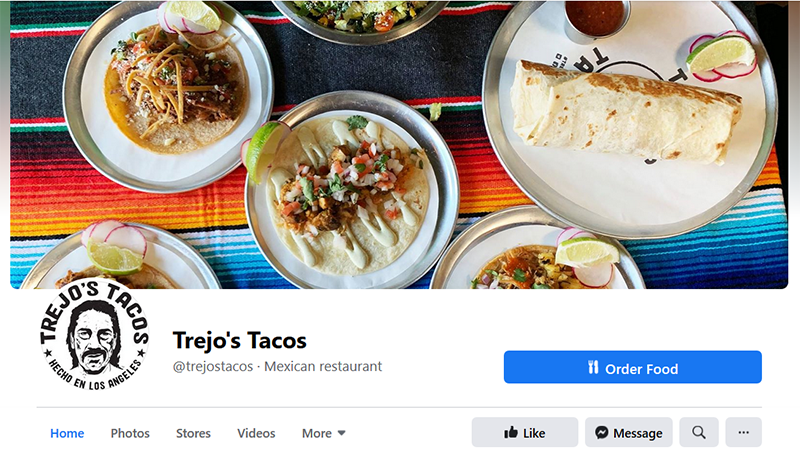
Trejo’s Tacos is a Mexican restaurant chain owned by successful actor Danny Trejo. There are three reasons it’s a great example of a restaurant Facebook page.
- Strong profile and cover photos. The profile photo is the logo, built around a recognisable monochrome photo of Danny Trejo. The cover is a simple, mouth-watering shot of food, brought to life by great lighting and splashes of colour.
- A clear call to action. It includes a button that takes you straight to ordering food, which is the perfect call to action for a fast-casual restaurant.
- Engaging content. Rather than a stream of menu photos, the page regularly features Danny Trejo himself.
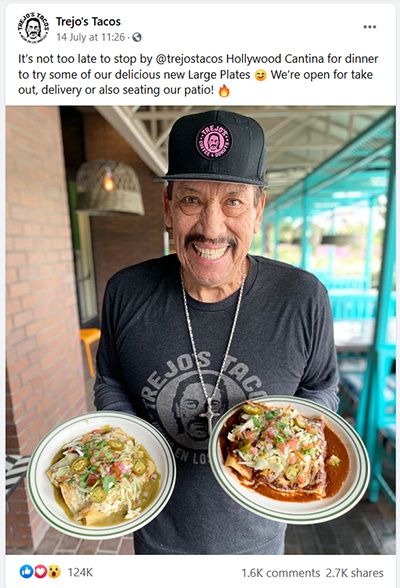
Most businesses aren’t run by a movie star, but the lesson travels: put the personalities behind your business at the front of your content. Your head chef, your longest-serving waiter and your dog who sits by the door all count.
Hawksmoor Steakhouse: brilliant cover photo and valuable description
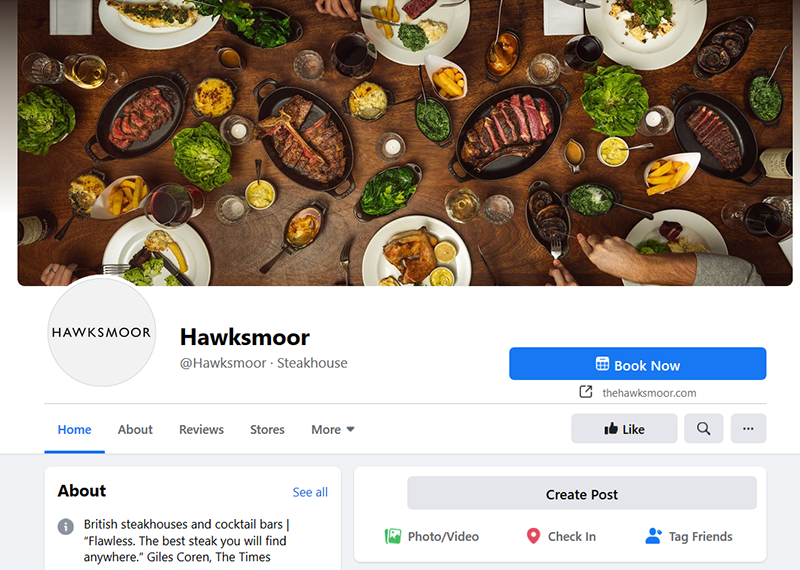
Hawksmoor Steakhouse’s Facebook page does two things we like.
- The cover image. A table set with food from the restaurant, shot mid-meal. It’s high quality, shows a variety of menu items, and the mid-meal moment gives it dynamism and plenty of inspiration about what to order.
- The description. It includes a quote from a review in The Times calling the restaurant “Flawless. The best steak you will find anywhere.” Borrowed authority, used well.
Shake Shack: good use of user-generated content
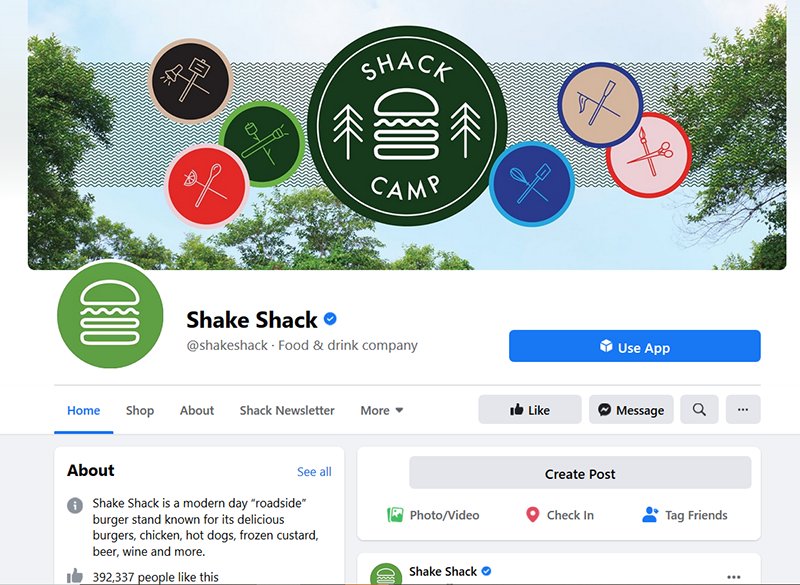
Shake Shack has a great page that promotes the overall brand rather than any single branch. The description tells the restaurant’s story in a few words, and the cover and profile photos are instantly recognisable as Shake Shack, even without showing any food.
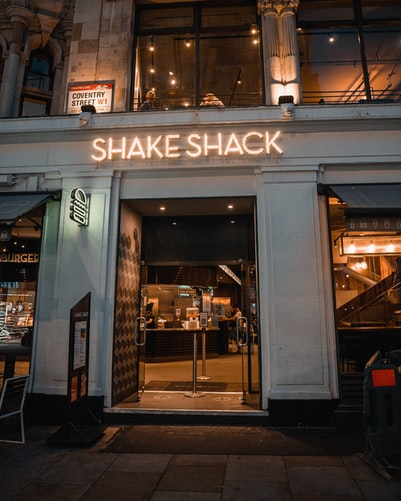
Image: Subhaan Saleem/Unsplash
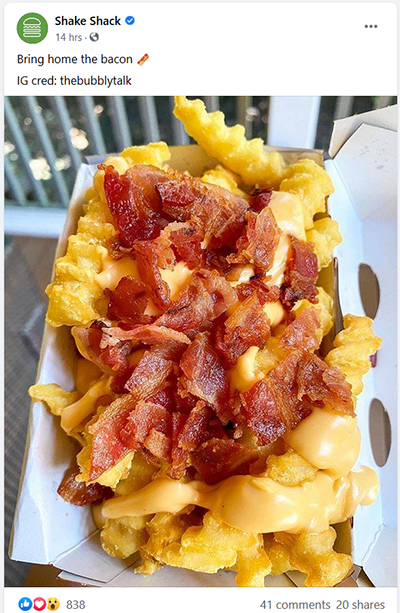
What really makes it stand out is user-generated content. Many posts are photos from customers’ own Instagram accounts. That creates authenticity and engagement, and it encourages other customers to snap their burgers too, because there’s a chance the brand will share it.
Raglan Road Irish Bar: takeaway ordering and Messenger
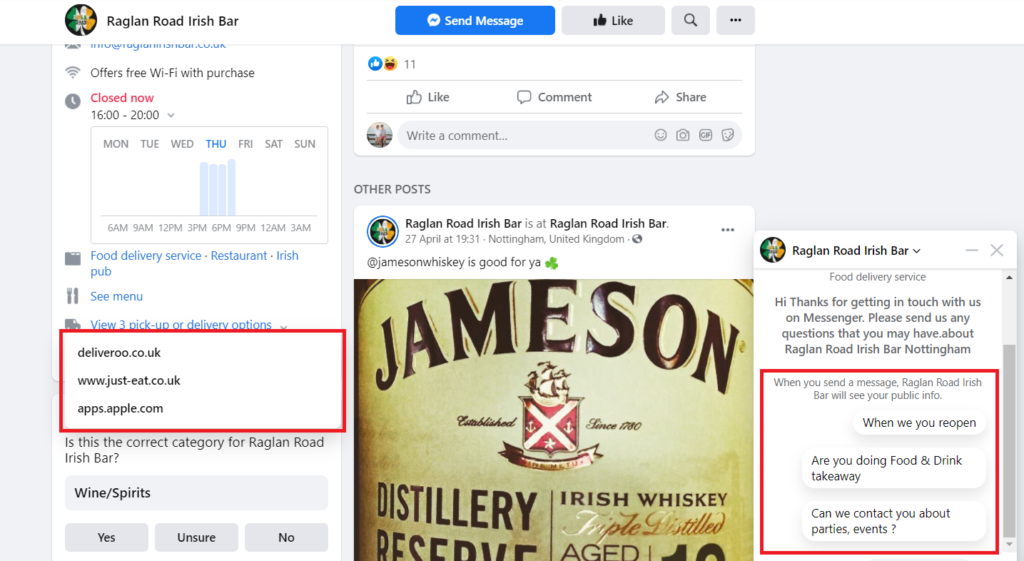
Raglan Road Irish Bar’s Facebook page does two interesting things.
- It points customers to delivery and pickup. The About section lays out the options, whether that’s a third-party service or the bar’s own branded app, and makes them clear further up in the description too.
- It uses Messenger. Common questions can be answered with a tap, so customers get an instant answer without waiting for a staff member to reply.
It also posts content its audience likes, and the About section has everything customers could need to know about the venue and the menu.
Chin Chin Ice Cream: driving merchandise sales and engagement
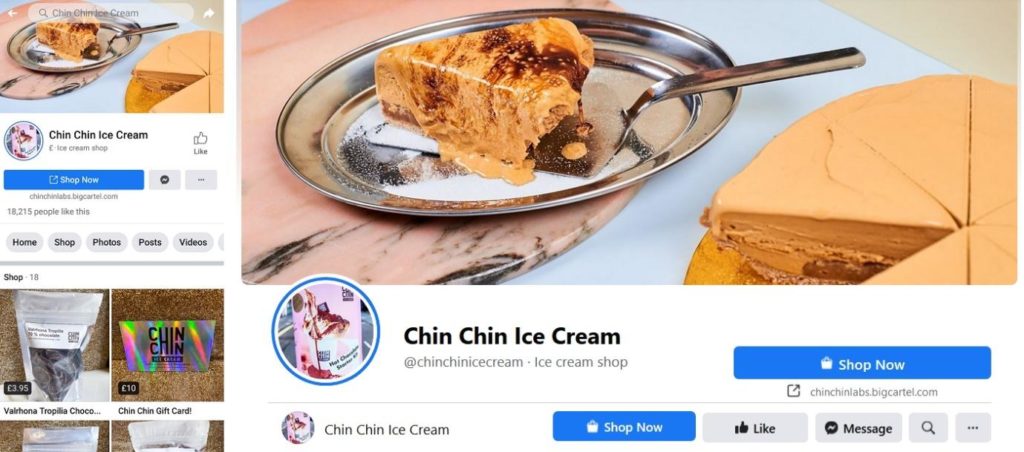
Chin Chin Ice Cream uses its page differently from the rest of the list. Instead of only promoting the parlour, it pushes people to its shop, where they can buy merchandise, ice cream toppings and gift cards. If your brand has fans, giving them something to buy beyond the main menu can lift revenue.
Burger and Lobster: a mouth-watering cover video
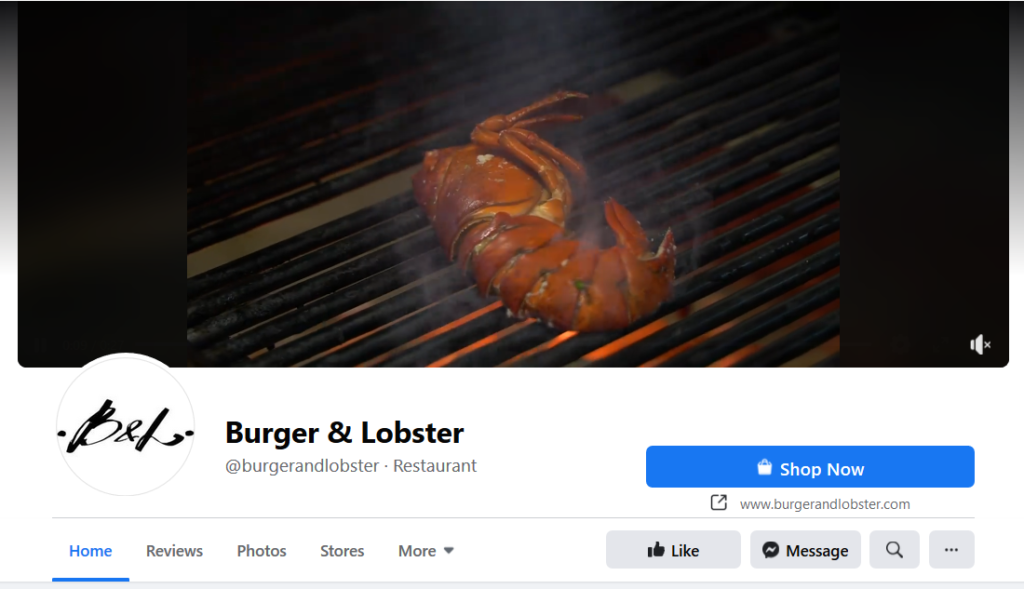
Burger and Lobster’s Facebook Page stands out for using a video as its cover instead of a photo. The footage shows food being prepared and highlights that it’s cooked on a giant grill. The visual focus is supported by user-generated posts the restaurant shares, and the page makes it easy to book a table or order takeaway through its call-to-action button.
What Do Successful Restaurant Facebook Pages Have in Common?
Here are the most important parts of a successful restaurant Facebook page.
High-quality images
The first thing people see is your profile photo and your cover photo. Make sure both are high quality, the right size and consistent with your brand. Facebook publishes a guide to recommended image sizes, and it’s worth checking it, because a cropped logo is a sad sight.
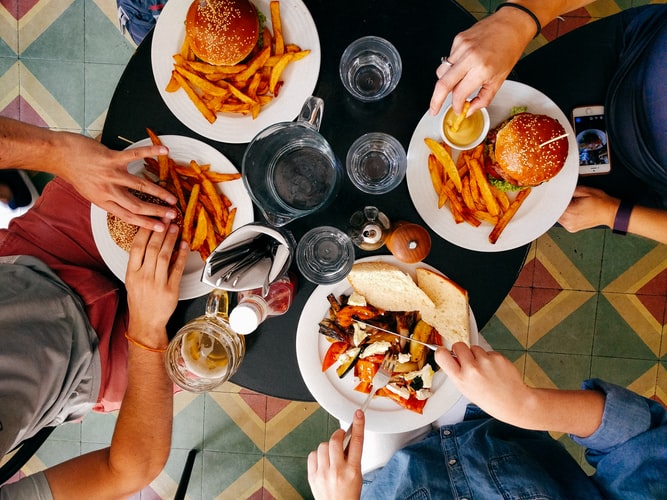
Image: Dan Gold/Unsplash
A detailed About section
The About section is prominent and holds your business information. Fill in as much as you can, and keep it up to date, especially opening hours:
- Location
- Website
- Reservation information
- Cuisine
- Phone number and contact details
- Opening hours
- Social media profiles
- Menu
- Reviews
A restaurant description that does some work
The trickiest part of the About section is the description: one or two sentences about your main selling point. Here are two good examples. The first is strong because it leans on heritage and location, which impress potential customers. The second works because it uses a positive quote, which gives the statement authority.
Sydney Cove Oyster Bar
Sydney Cove Oyster Bar is one of the most historical and iconic venues on the water’s edge of Circular Quay and has been serving Sydney’s finest seafood since 1988.
Hawksmoor Steak House
British steakhouses and cocktail bars | “Flawless. The best steak you will find anywhere.” Giles Coren, The Times.
A call-to-action button that matches your goal

One of the most useful features of a Facebook page is the call-to-action button. Use it to get customers to order food, download an app, reserve a table or call you. Think about your page’s main job and build the button around it. A restaurant that wants orders shouldn’t send people to a contact form.
Stories and Reels
Facebook Stories and Reels give you a quick, casual way to show behind-the-scenes moments, flash sales and limited-time offers. Because Stories disappear, they create urgency and give people a reason to check your page regularly. Try polls and question stickers to get people replying, and short vertical video to reach people who don’t follow you yet. Keep it casual: nobody needs a studio-lit rendition of your lunch special.
Customer interactions and reviews
Answer comments and messages, and don’t skip the awkward ones. Responding to negative feedback constructively shows you care, and other customers read those replies. Ask happy customers to leave a recommendation or review on your page, and consider a small thank-you for those who do. A lively, well-looked-after page builds a community around your restaurant.
Facebook Events
Events are a fantastic way to drive footfall. Themed nights, live music and tastings can all be promoted through Facebook Events, which let you invite people directly and see who’s coming, so you know how many to cater for. Keep posting updates about the event so the excitement doesn’t fizzle out.
Facebook and Instagram ads
Ads can be a powerful way to reach new customers. Create targeted campaigns that highlight specific dishes or promotions, show them to people within a set distance of your restaurant, or tailor them by age or interests. Watch the results closely so you can tweak what isn’t working, and use eye-catching visuals with short, clear text. For a step-by-step, see our guide to Facebook ads for restaurants.
Restaurant Facebook Post Ideas (With Captions to Steal)
Facebook posts are an essential part of any restaurant page. If you’re stuck, here are the main types of content to rotate through.
Menu introduction posts
Restaurants often introduce dishes on Facebook, whether it’s a new meal or an old favourite. Choose a high-quality photo and a description that makes the food irresistible.
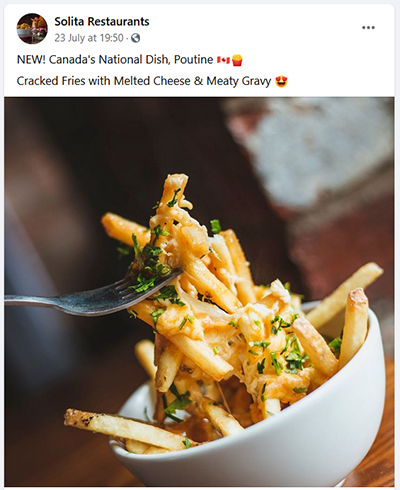
- A new dish: “Meet the new face of our menu. We’ve been testing it all week and our chef has refused to share. Come and see what the fuss is about.”
- A classic: “Some dishes don’t need a reason. Our [signature dish] is back on the board tonight.”
- A behind-the-scenes plate: the chef plating up, steam rising, a bit of chaos in the background.
User-generated content
User-generated content is an excellent way to get new photos and posts for free. Instagram is a great source: keep an eye out for photos you’re tagged in, and if you love one, ask permission to share it on your Facebook page. Credit the photographer, and say thank you.
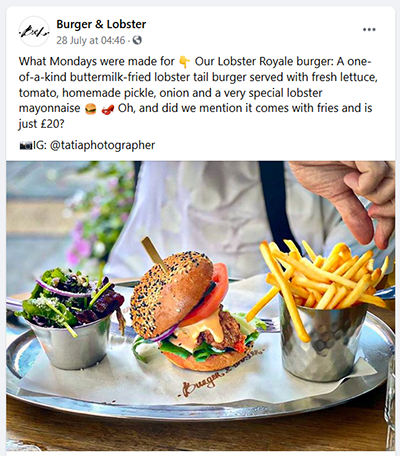
- “Loving this shot from [name]! Tag us in your photos and your dinner could be our next post.”
- A “Diner of the week” feature.
- A customer review screenshot with a short thank-you.
Restaurant news posts
Keep customers up to date with what’s happening at your restaurant. Updates worth posting include:
- Changes to the menu
- Interior changes
- Different opening times (bank holidays, Christmas, private events)
- Collaborations with food bloggers or other local businesses
- Upcoming events
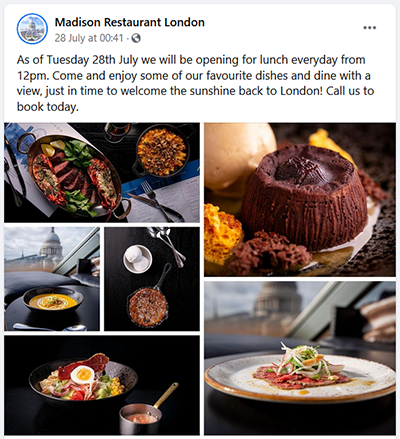
Time-sensitive posts
Sharing content about something that’s happening right now is a great way to create engagement and borrow the popularity of something else. Think of a big match, a news story, the weather or just “it’s Friday”.
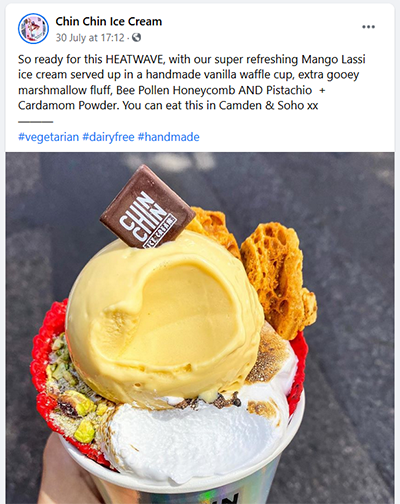
- “It’s raining. It’s cold. Soup is the answer.”
- “Match night! Big screen, cold drinks, hot wings. Book a table before kick-off.”
- “It’s Friday. You’ve earned dessert.”
Promotional posts
Telling people about promotions gives them a reason to visit now and boosts engagement. You can also run contests where people enter by commenting on or sharing a post.
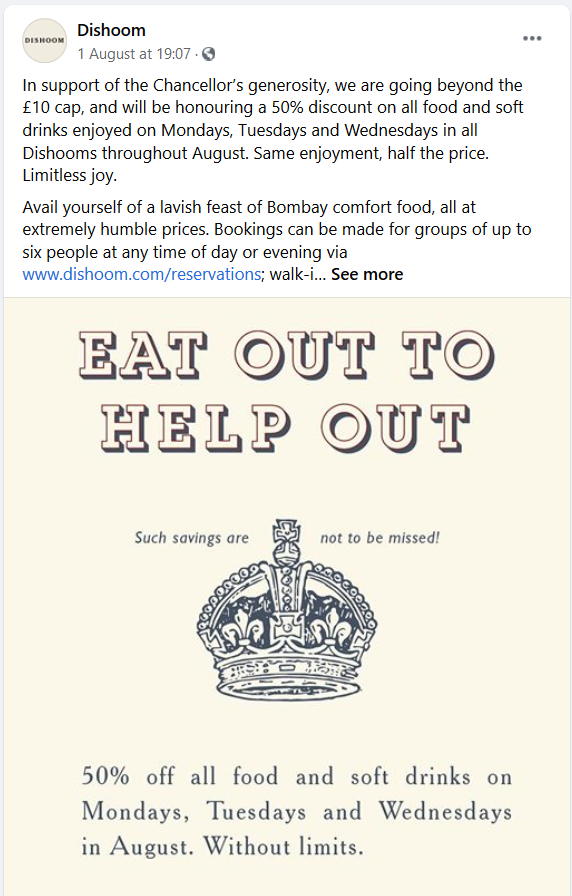
- Early-bird and midweek deals
- A comment-to-win competition (a free meal for two always goes down well)
- A loyalty or birthday offer, with a link to sign up
Media coverage posts
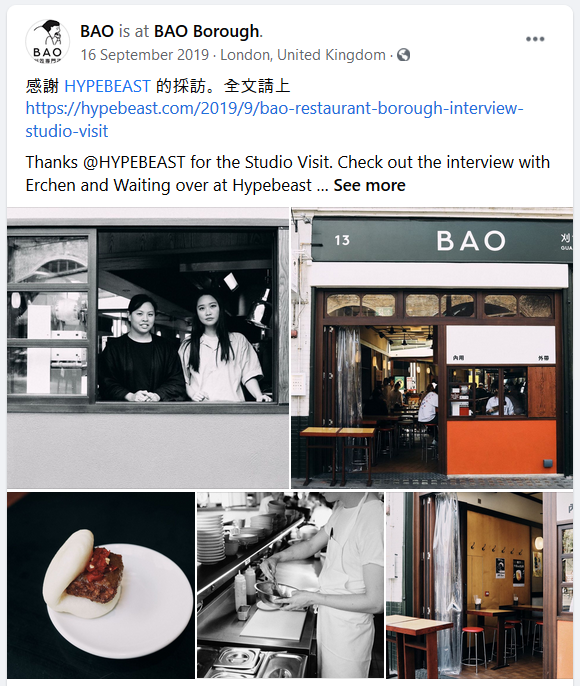
Make the most of any positive press by sharing it on your page. You can also share blog posts, images from other social platforms and customer reviews on third-party sites.
A simple weekly posting plan
You don’t need to post daily to look active. A realistic rhythm for a busy restaurant:
- Monday: the week’s specials or new menu item.
- Wednesday: a behind-the-scenes Story or Reel.
- Friday: a promotion, event or weekend booking reminder.
- Sunday: a customer photo or review.
Restaurant Facebook Page Checklist
Before you post anything, tick off the basics. To get the most out of your page, make sure you’ve:
- Chosen profile and cover images that are high quality and consistent with your brand.
- Kept your contact information and opening hours accurate.
- Set a call-to-action button that matches your main goal (ordering, booking or calling).
- Written a one- or two-sentence description that includes your main selling point.
- Added your menu, or a link to it, and a link to your own online ordering page.
- Checked Facebook’s insights regularly, to see which posts get the most interaction, then done more of those.
Want to take orders without handing a cut to a delivery app? Read about online food ordering systems and put the link straight on your page.
Facebook Pages Are an Essential Part of a Restaurant Marketing Strategy
Restaurant Facebook pages are an essential part of any restaurant’s marketing, but they aren’t the only way to promote your business on social media.
For more on getting more from your social pages, check out our articles on restaurant social media marketing in general and restaurant Instagram marketing. You may also like our guide to Facebook for restaurants.
For more restaurant marketing tips, check out our top restaurant marketing ideas.
Last Updated on November 16, 2026 by Becky Halls
2 thoughts on “6 Best Restaurant Facebook Pages to Inspire Your Own”