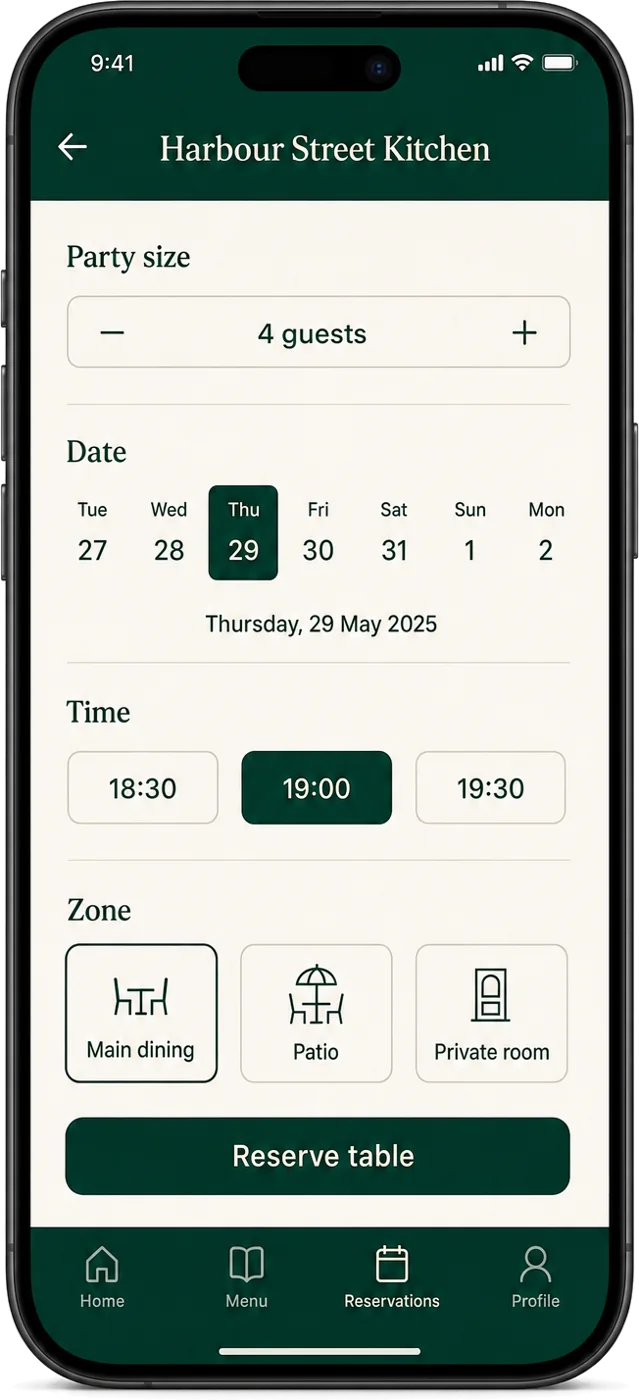
What is an Online Food Ordering System?

Your customers are hungry, they’re on the sofa, and they would rather eat their own coat than ring a restaurant and talk to a human. Fair enough. That’s exactly why restaurants, takeaways and coffee shops that let people order online sell more, and why an online food ordering system has gone from “nice to have” to “how did we ever cope without it?”.
Online ordering creates more sales opportunities, makes delivery and takeout easier to reach, and even gives you contactless table service without hiring more staff. Here’s what these systems are, how they work, what to look for and how to avoid handing a quarter of every order to someone else.
What is an Online Food Ordering System?
An online food ordering system is software that lets restaurants, coffee shops and bars accept orders online. Customers choose and pay for their food, and the kitchen is alerted the moment an order lands. No phone call, no scribbled notes, no “sorry, was that two margheritas or three?”.
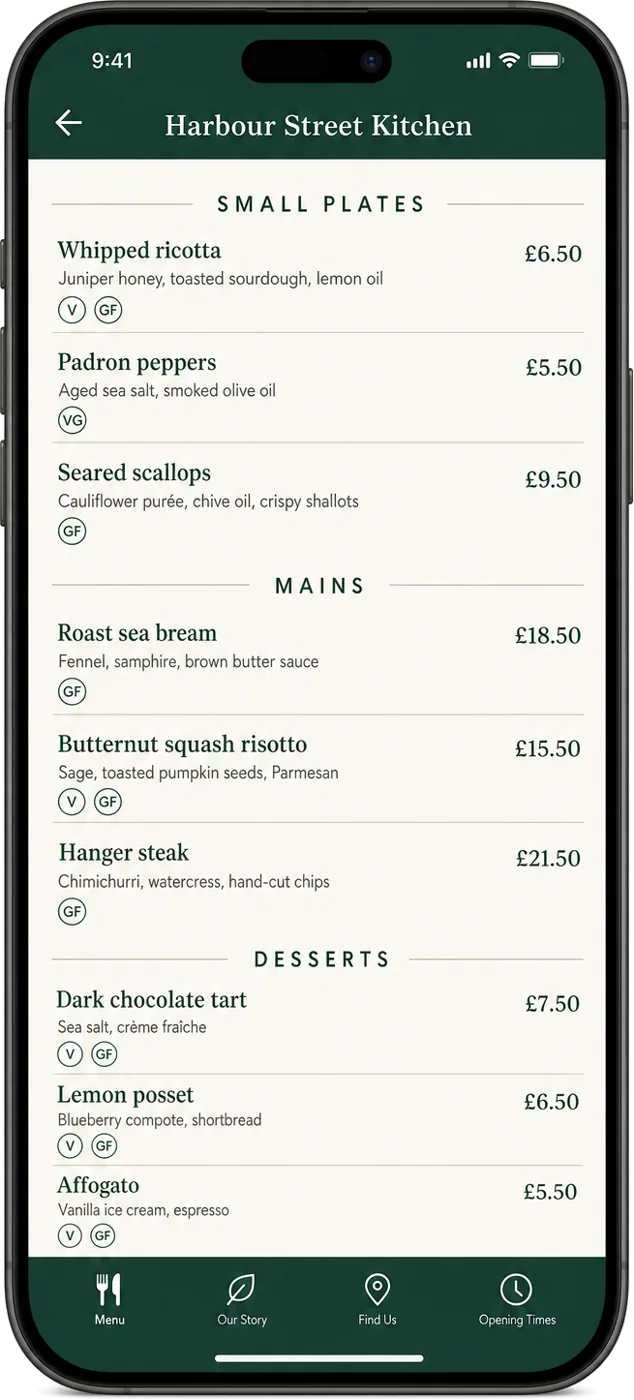
Despite the lack of personal chat, customers get everything they would get in person: the full menu with customisation, and a choice of payment methods such as card, Apple Pay, Google Pay, PayPal or cash on pickup or delivery. If you want ideas for how to present what you sell, see these menu examples for restaurants.

How does an online food ordering system work?
- The customer browses your menu on your website or in your app, picks their items and adds any extras or changes.
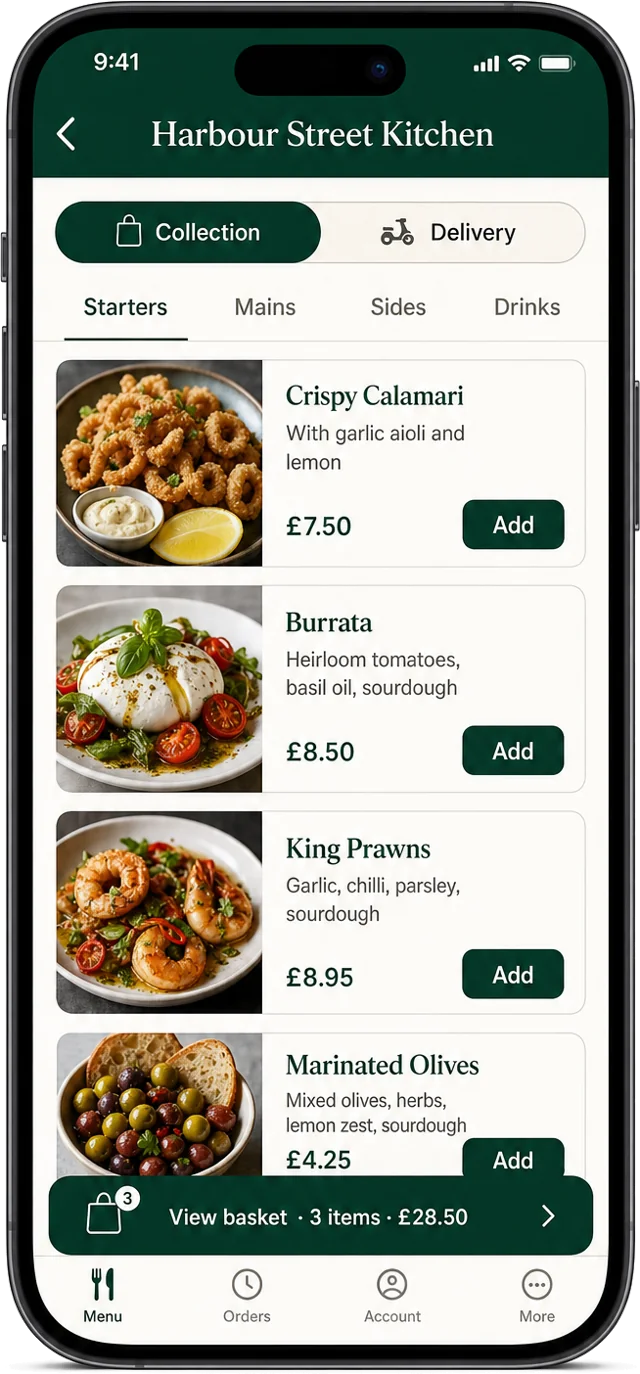
- They choose how to get it: delivery, pickup, or eating in with an order placed from their table.
- They pay online (or choose cash on delivery or pickup if you allow it).
- Your kitchen is alerted straight away and gets the order with everything the customer asked for.
- The customer is kept in the loop with confirmations and updates, so you spend less time answering “where’s my food?”.
Online and App Ordering
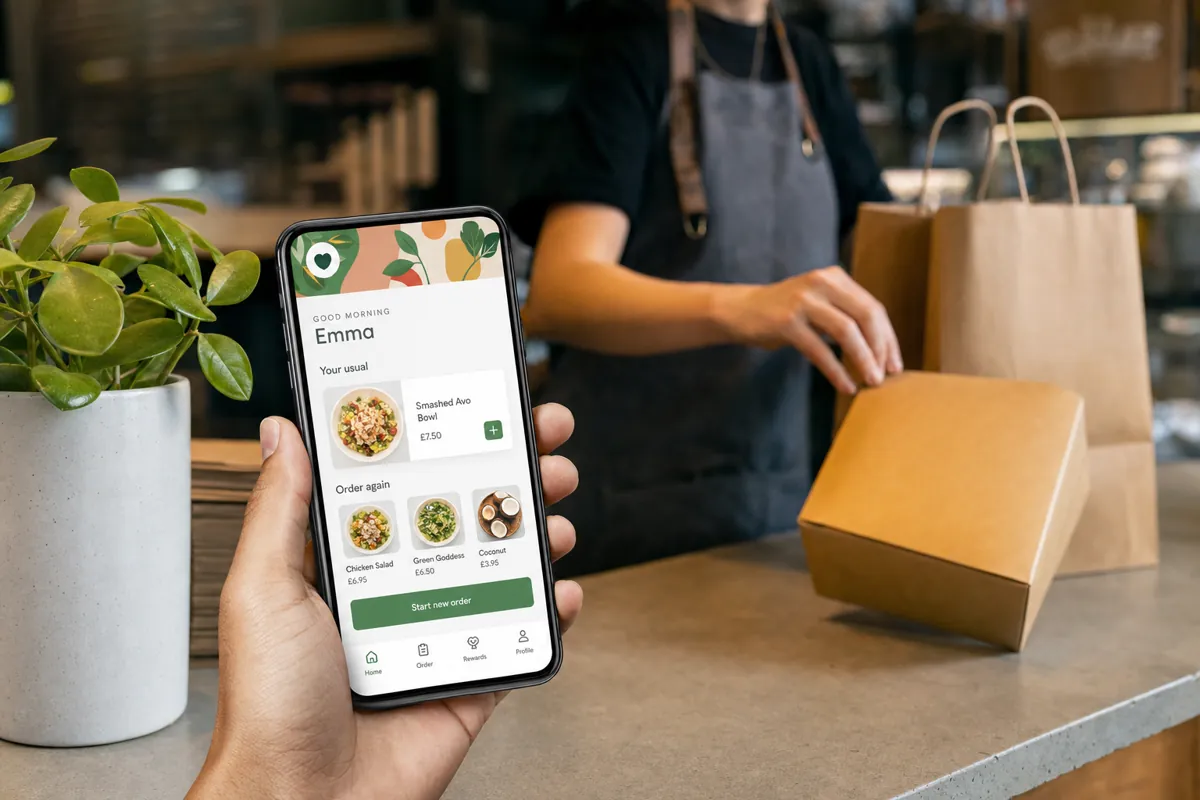
A good ordering platform gives you both a browser-based system, so customers can order from their desk or sofa, and an app, so they can order on the move. Together they give customers complete flexibility in how they buy.
Mobile responsiveness matters a lot here. Most food orders now come from smartphones, so the system has to work smoothly on every screen size. If browsing the menu and placing an order feels clunky, customers will happily go and order from someone else.
What features should an online ordering system have?
The benefits of a good ordering system go way beyond buying food. Look for:
- Full menu management. Categories, photos, modifiers (extra cheese, no onions) and the ability to hide items when you run out. Our guide to interactive restaurant menus shows what a good one looks like.
- Flexible payments. Card, Apple Pay, Google Pay, PayPal and cash options.
- Delivery, pickup and table ordering. One system for all three.
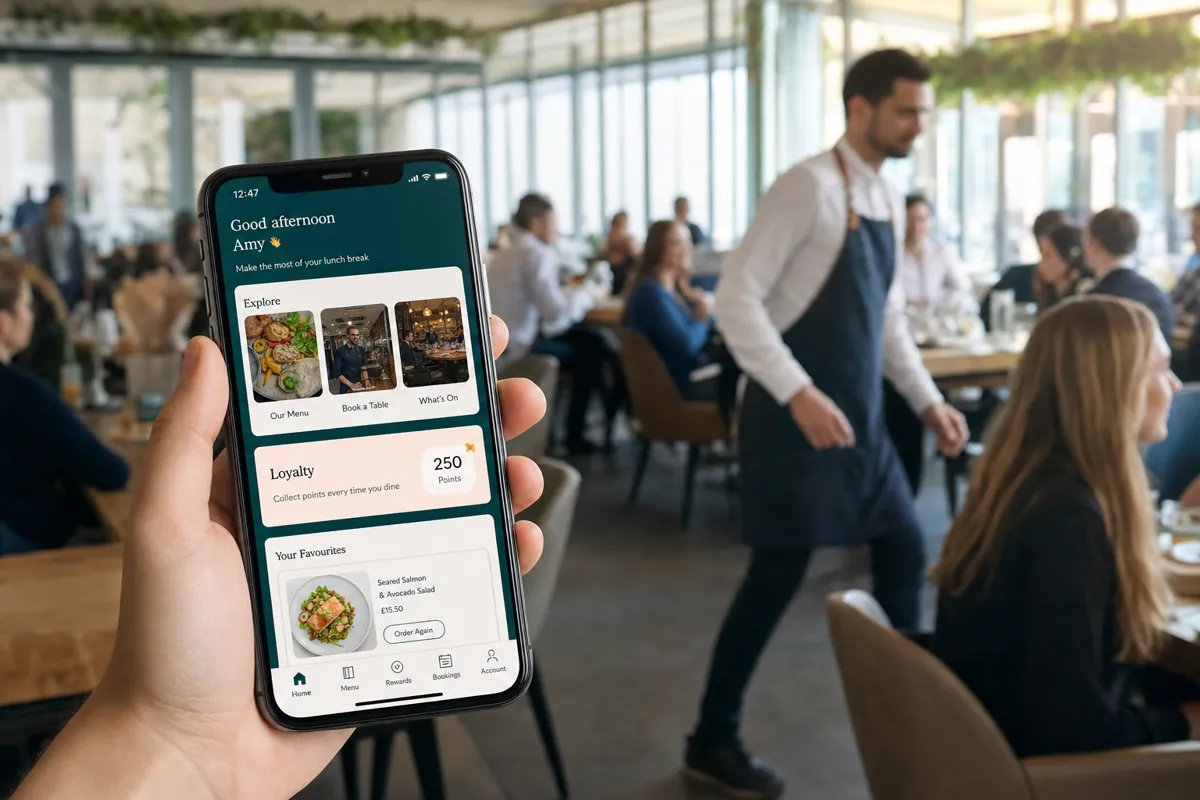
- Rewards schemes and coupons to encourage repeat buys. Take a look at these food ordering offer ideas for inspiration.
- Customer profiles so people can save their details and reorder in a couple of taps.
- Push notifications to tell your regulars about specials, new dishes and rainy-day deals.
- Analytics that show how people buy from your restaurant: best sellers, busiest times, average order value.
- Business information such as your address, contact details and opening and closing hours, easy to find.
- A messaging centre and FAQ section to remove barriers to purchase.
- Feedback and reviews, so you can gather insights for improving your service and your menu.
For a longer checklist, see 10 must-have restaurant app features.
Own system or delivery app: what’s the real cost?
Another important consideration is the difference between owning your online ordering system and using a third-party aggregator. Aggregators typically charge huge commissions that eat into your profits. The third party also stands between your business and the customer, which makes it difficult to build a customer base.
How huge? Published rates for the big delivery apps range from about 15% to 30% on delivery orders, depending on the plan, with extras like payment processing and promotion fees on top (we checked in October 2026, and rates change, so look at your own statements). As a rough illustration, if you take $2,500 a week through a delivery app charging 25%, that’s $625 a week, or around $2,700 a month, going to the app instead of staying in your till.
With your own system, you have a direct relationship with your customers and don’t pay any commission, potentially saving thousands of dollars each month. You also own the customer list, so you can bring people back with a push notification instead of hoping the algorithm remembers you.
That doesn’t mean you have to ditch delivery apps altogether. Many restaurants use them to be discovered and push their own ordering system for repeat customers. Think of the aggregator as the shop window and your own app as the regulars’ bar.
Security Features
Security features in online food ordering systems play an important role in protecting customer data and maintaining trust. SSL certificates and strong data encryption ensure that sensitive information is shielded from potential breaches.
Secure payment gateways add another layer of protection, so customers can pay confidently. Choose a system that takes payments through a reputable provider, so card details never sit on your own computer. Prioritising security gives your customers peace of mind and encourages them to order again.
How to choose an online ordering system
Before you sign anything, ask these questions:
- What does it really cost? Monthly fee, per-order commission, payment processing fees and any set-up charges. Add them up.
- Do you own your customer data? If the platform keeps the customer list, you’re renting your own customers.
- Can you brand it? Your logo, colours and name, not someone else’s.
- Is there an app as well as a website? Apps bring people back more often.
- How quickly can you launch? A few days is realistic, a few months is not.
- Can you try it first? A free trial beats a sales pitch.
Thinking of going further? Our guide on how to build a food ordering app explains the process, and if your current provider is closing down, see our GloriaFood alternatives.
Set Up an Online Ordering System for Your Restaurant
AppBuild.diy by AppInstitute is an all-in-one online food ordering system for restaurants and takeaways. Businesses can implement both a browser-based system and a mobile app to ensure customers have full flexibility in how to order.
Restaurants that use our solution get:
- Full menu integration
- Various payment options
- Customer profiles
- Advanced analytics
- Rewards schemes and coupons
- Control over their branding and customer base
- Pay zero commission
- And much more.
Getting set up via our app builder is easy, and you can be ready to launch in just a few days. Head over to our platform to test out our features for free or get in contact with one of the team to find out more.
Online Food Ordering System FAQ
What is an online food ordering system?
Software that lets a restaurant, takeaway, coffee shop or bar take orders and payments online and sends them straight to the kitchen.
Do I need an app, or is a website enough?
A website works, but an app makes reordering quicker and lets you send push notifications. The best setups offer both.
Is my own ordering system better than Uber Eats or DoorDash?
They do different jobs. Delivery apps help new customers find you, but charge commission on every order and keep the customer relationship. Your own system keeps the margin and the customer data, which is why many restaurants use both.
How much does an online food ordering system cost?
It varies. Some charge a commission on every order, others a flat monthly fee. Compare the total cost, not the headline price, and check whether there are payment processing fees on top.
Can customers order from their table?
Yes. A good system supports table ordering, so guests can order and pay from their phone without waiting for a server.
Written by Ian Naylor, Founder of AppBuild.diy by AppInstitute
Last Updated on November 16, 2026 by Becky Halls