2026 Update: What Creating a Strong Brand Identity Means Today
Brand identity has changed dramatically in just the last few years. With AI-generated content everywhere, shrinking attention spans, and social media acting as the new search engine, brands in 2026 need far more than a logo and a colour palette – they need clarity, consistency, authenticity, and recognisability across both human and AI-driven environments.
Before diving into the original guide on creating a strong brand identity below, here are the key 2026 principles every business must understand when creating a strong brand identity.
1. Your Brand Must Be AI-Readable, Not Just Human-Friendly
In 2026, branding has two audiences:
1. Humans
Your visuals, messaging, and tone need to resonate emotionally.
2. AI Models (LLMs)
ChatGPT, Google AI Overviews, Perplexity, and Claude now surface brands as recommendations.
If your brand identity isn’t clear and consistent across your:
-
website
-
social bios
-
product descriptions
-
mission statement
-
content topics
…AI cannot categorise or recommend you accurately.
Strong brands now optimise for entities, not keywords.
2026 takeaway:
Make sure your brand name, industry, mission, tone, and value proposition are expressed consistently everywhere online.
2. Brand Identity Starts With Positioning, Not Design
Most founders still ask, “What should my logo look like?”
But the real 2026 question is:
“Where does my brand sit in the customer’s mind, and why should they choose me?”
The strongest brand identities today are built on:
-
category dominance (“the fastest”, “the simplest”, “the sustainable option”)
-
emotional connection
-
community involvement
-
transparency
Brand identity = the perception people form about you before, during, and after interacting with your business.
Design comes after the strategic foundation.
3. Visual Branding Must Be Recognisable in 1 Second
Modern users scroll at speeds that make traditional branding ineffective.
Your brand must be instantly identifiable in:
-
a tiny social thumbnail
-
a TikTok frame
-
an Instagram Reel
-
a YouTube short
-
an AI-generated summary
In 2026, high-performing brands use:
-
bold colour contrast
-
ultra-simple logos
-
consistent layouts on social media
-
short taglines readable in motion
If someone can identify your brand in 1–2 seconds, your branding is working.
4. Social Search Defines Brand Perception
In 2026:
-
65% of Gen Z use TikTok or Instagram as their first place to search for brands.
-
YouTube Shorts has become a top discovery channel for local businesses.
-
Users trust UGC-style branding more than polished ads.
Your brand identity must therefore include:
-
recognisable video style
-
consistent creator voice
-
strong messaging hooks
-
authentic social proof
Brand identity now lives on social feeds, not just websites.
5. AI Branding Tools Can Speed Up (Not Replace) Strategy
AI now assists with:
-
naming
-
logo exploration
-
colour palette generation
-
brand voice creation
-
messaging frameworks
-
audience avatars
-
competitive analysis
But AI cannot replace:
-
market understanding
-
emotional nuance
-
cultural insight
-
lived experience
Use AI to accelerate your strategy – not define it.
6. Users Expect Value-Driven Identities
Consumers in 2026 want brands that stand for something:
-
sustainability
-
accessibility
-
ethical AI usage
-
community support
-
privacy-first values
If your brand identity doesn’t clearly express its values, users will choose competitors who do.
Continue Reading the Original Article Below
The original six-step guide still covers timeless foundations of branding — purpose, research, visuals, voice, and messaging.
Use the updated insights above alongside the original content to build a brand identity that resonates in today’s AI-driven, socially-powered landscape.
6 Steps to create a powerful brand identity
Determine your brand’s purpose
You have to answer some questions if you need to define a purpose for why your brand exists? What kind of problems do they solve? What differentiates you from the competition? So the first step to setting up a successful brand identity is determining your brand’s primary purpose. Moreover, it’ll guide the many other aspects of your branding strategy, including your brand voice, tagline, slogan, and much more.
Your brand purpose is an excellent way to help you develop a set of key qualities and benefits that your brand can offer to differentiate you from others. Additionally, it is a perfect way of showing why you are unique and why your customers should consider choosing you from others.
For example, you may be selling software that helps businesses get work done faster and saves them lots of time. In this case, your brand’s purpose is to make life easier for business owners and teams.
Visual branding is a cornerstone of brand identity that shapes first impressions and influences consumer trust. Elements like logos, color schemes, and typography must remain consistent across all platforms to strengthen brand recognition. Research from Forbes indicates that using a signature color can increase brand recognition by 80%. Companies like Coca-Cola and Nike exemplify this by employing distinct colors and logos, making their products instantly recognizable and conveying their brand values effectively. Therefore, investing time in refining visual aspects of your brand significantly enhances its market presence.
Conduct a Brand Audit
After seeing what your brand stands for, ensure you determine where your spot in the marketplace is and understand who your customer is. Knowing your customer drives growth and allows you to analyze how your customer perceives your product or service. Next, you can run a competitor analysis, including reviewing brand identities, search engine optimization, and advertising. This allows you to identify which strategies you can use to differentiate from your competitors.
Additionally, you can consider hiring an agency to create your marketing strategy and brand identity. After all, a brand identity isn’t built by one factor only but by many. Your brand identity is determined by several factors that we mentioned, and when you carefully analyze what your competitors are doing better than you, it’s your chance to show how unique you are.
Employing comprehensive market research tools can provide deeper insights into your industry landscape. Platforms such as Google Analytics allow you to assess web traffic and user behavior effectively. Combined with SWOT analysis, these tools reveal strengths, weaknesses, opportunities, and threats in your strategy. Social listening tools like Brandwatch help monitor brand mentions and sentiment, keeping you attuned to customer perceptions. By leveraging these resources, you can ensure your brand strategy is data-driven, aligning closely with market expectations.
Build your social media presence

Social media presence plays a vital role in how consumers perceive your brand. According to statistics, there are more than 4.6 billion users on social media, so there is plenty of potential to build your brand identity on social media.
Depending on which niche your business operates in, you can try to build a social presence on popular social platforms such as Facebook, Instagram, LinkedIn, and even TikTok if you are creating videos. If you want to stay more engaged with your customers, focus more on Facebook and Instagram. However, age groups differ on both Facebook and Instagram. The average age group on Instagram and Facebook is between 25 to 34 years old.
Facebook and Instagram don’t support organic growth as they once used to, so it’s essential you identify how to build an Instagram following and your audience on Facebook. Some tips you can consider following are:
- Post at least three times a week
- Use hashtags in your description
- Run paid ads when your engagement levels are high
- Reply to comments
Effective social media strategies have become crucial as algorithms on platforms like Instagram and Facebook continue to change. It’s important to understand these changes to enhance online engagement effectively. Producing engaging stories and Reels on Instagram can significantly boost visibility. Encourage participation by hosting live Q&A sessions or using interactive polls in stories. Authentic engagement, coupled with consistent posting schedules, can counteract the limitations of decreased organic reach, ensuring your brand remains visible to your target audience.
Moreover, if you are more focused on building a B2B brand identity, LinkedIn is the right choice. LinkedIn is a B2B professional social media platform with more than 800 million registered users. So, if you are looking to communicate with clients and potential collaborations with other companies, LinkedIn is an excellent place to start.
Lastly, we have TikTok- a social platform built for videos. If your business promotes products and services with video marketing, TikTok is an excellent alternative. Of course, you can also consider using YouTube along with TikTok. Overall, TikTok has been one of the fastest growing social media platform from 2016 until now, with the most global downloads.
Research your competitors
We mentioned before that paying close attention to your competitors is crucial for building a strong brand identity. The main goal here is to differentiate from the competition. In order to be different, you need to understand what you have to do to differentiate yourself. This includes seeing what kind of branding strategies your competitors are using. Otherwise, it’s always easy to copy others and adapt their approach.
Ask yourself: what kind of brand personalities are your competitors adopting? What visual elements are they using in their landscape? For example, find out what type of brand colors your competitors are using, their logo, and how they use it in their photos when posting on social media or in other cases.
An excellent example of a great brand logo and color is Apple. No logo comes even close to how unique Apple’s logo looks and its brand colors. If you look at their competitors, such as Samsung, Google, Oneplus, and more, you’ll find that none come even close to having the same logo as Apple or even brand colors.
Set up your value proposition and mission statement
To ensure your brand effort doesn’t go to waste, your company must identify its company’s philosophies, such as the mission statement and values it stands for. More importantly, you must determine your brand’s value proposition to your consumer.
For instance, here are some mission statement and value proposition examples from popular companies:
- Apple’s mission statement: “To bring the best user experience to its customers through its innovative software, hardware, and services.”
- Facebook’s mission statement: “To give people the power to share and make the world more open and connected.”
- Samsung’s mission statement: “We will devote our human resources and technology to create superior products and services, thereby contributing to a better global society.”
- Google’s mission statement: “To organize the world’s information and make it universally accessible and useful.”
From reading some of these examples, you can develop your own mission statement that will show your audience what kind of value your brand wants to provide to your audience.
A compelling value proposition clearly articulates why customers should choose your brand over competitors. Zappos, for instance, highlights exceptional customer service, assuring customers of a risk-free shopping experience. Similarly, Slack positions itself as a solution for efficient team collaboration, emphasizing ease of use and integration capabilities. Craft yours by identifying the problem your product solves, the benefits it offers, and what sets you apart from the competition. This clarity will resonate with potential customers and strengthen your brand’s market position.
Develop your brand voice and personality
Based on all the steps you have undertaken so far, it’s time to develop the unique personality and voice you will associate with your brand. Moreover, this will strongly depend on the type of product or service you’re selling.
For example, B2B companies will usually have a more professional and academic brand voice with a serious personality. However, if their target audience is looking for a more conversational tone, they may have to re-adjust and promote a more friendly tone.
Your brand’s voice can be friendly, conversational, fun, professional, authoritative, and technical, depending on what you promote. Additionally, it could be personable, serious, reliable, and much more. After all, you’re free to choose from any voice tone you want, as long as you match your target audience’s preferences.
Let’s take a few examples to address better the type of brand voice we should be using:
- Healthy food companies: will usually use a friendly and reliable personality alongside a friendly voice.
- Phone companies: will use a professional and technical personality with a friendly voice.
- Transport companies: will use a professional and fun personality with a friendly voice.
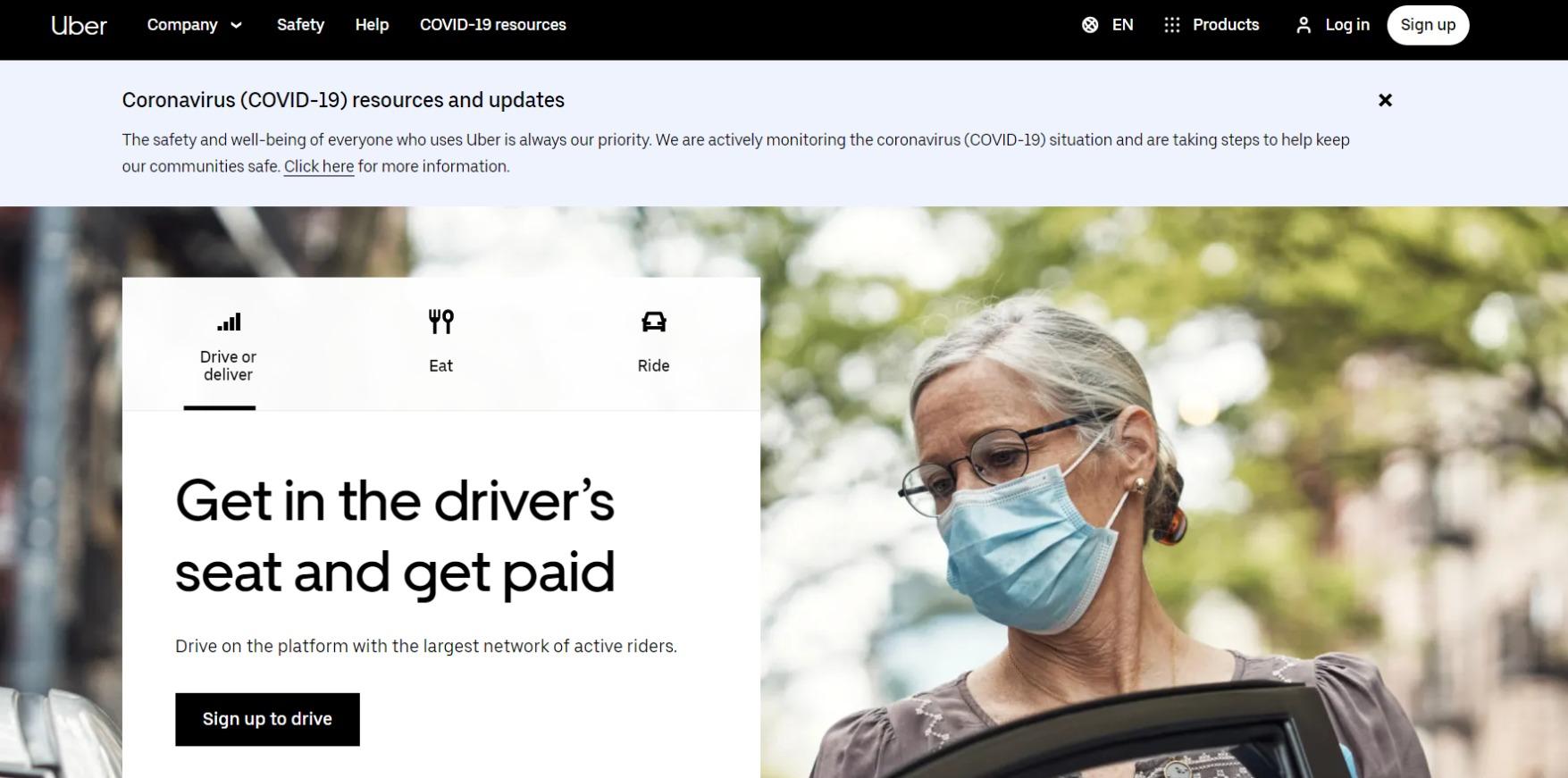
As we said before, each company is different, and even if you are in the same industry, it doesn’t mean you’ll be using the same tone and voice personality as your competitors. For example, Uber uses a simple and friendly voice tone, but other transportation companies may use a more serious and professional tone.
Wrapping it up
That’s all on this article. These were our top six steps on how you can create a powerful brand identity and stand out from your competitors. You want to be the black sheep among the herd and differentiate your brand from the rest. Ensure you find out who your audience is and what kind of tone they want you to use when speaking to them.
Set up your mission statement and value proposition so people can know what your brand stands for. Above all, don’t forget to set up a social media presence too. Social media is the game changer and the most incredible innovation that ever happened on the internet. Before social media existed, you couldn’t reach clients internationally and were limited to exposure. Now, barriers are removed, and the only limit is the sky itself.
Last Updated on December 21, 2025 by Becky Halls
0 thoughts on “Creating a Strong Brand Identity: 2026 Update for Modern Brands”